

Controlling hangar construction costs effectively largely occurs before construction begins.
Detailed preliminary planning, correct structural selection, accurate aircraft requirements, efficient space design, and thorough site condition assessment—doing these things well naturally keeps costs under control.
The goal isn’t simply to reduce material or equipment prices, but to ensure that every penny spent serves structural safety, operational efficiency, and long-term usability.
Safety cannot be compromised, functionality cannot be reduced, but waste can be avoided.
1.Why Can’t Prices Be Quoted Per Square Meter?
Ordinary factory buildings have uniform styles, small spans, and simple facilities, making pricing per square meter feasible. However, hangars are customized projects—aircraft size, span clearance, structural form, local climate, fire safety rating—everything is different. Even with the same building area, different configurations and functions can result in vastly different final costs. Using price per square meter is meaningless.

2.Money is Mainly Spent in Six Areas
1) Design Services.
Many project owners overlook design costs, even though early design investment often delivers the highest return. The overall layout planning, steel structure stress calculation, load verification, and fire protection and electromechanical system design all occur at this stage. A well-designed system reduces excess steel and avoids rework and revisions later, controlling waste at the source.
2) Main Steel Structure.
This accounts for the largest portion of the hangar cost. Larger spans and higher clearances require higher steel specifications and component strength, increasing steel consumption and processing difficulty, directly determining the cost baseline.
3) Enclosure System.
This includes the roof, walls, insulation, waterproofing, and corrosion protection – a complete system. Material selection depends on the climate of the project location. Humid, coastal, and high-temperature areas require better corrosion-resistant, heat-insulating, and waterproof materials, resulting in higher initial investment but mitigating later maintenance frequency and costs.
4) Hangar Door System.
Large hangar doors are the most obvious difference between hangars and ordinary factory buildings. Large-span sliding and folding doors have stringent requirements for structural strength, sealing, and electrical control stability; these are specialized components and cannot be avoided in the budget.
5) Transportation and Installation.
This includes material transportation, on-site hoisting, manual installation, and equipment leasing. Overseas projects also incur additional costs for sea freight, customs clearance, cross-border logistics, and local construction, significantly increasing the overall cost.
6) Fire Protection and Mechanical Equipment.
Hangers are key aviation protection areas, with much stricter standards for fire protection, ventilation, lighting, and electrical systems than ordinary factory buildings, requiring specialized design and construction. Every hangar project must include this investment because it directly affects project approval and safe operation.
3.Three Variables That Really Drive Up Costs
1) Aircraft Size.
This is the primary variable affecting price. Small aircraft and business jets require less span and space, keeping costs manageable;
Large passenger aircraft and transport aircraft require much larger hangars.
Their wider wingspans, longer fuselages, and higher tails demand larger column-free spaces.
Engineers may also need stronger structural systems, which increases steel consumption and overall construction costs.
2) Structural Form.
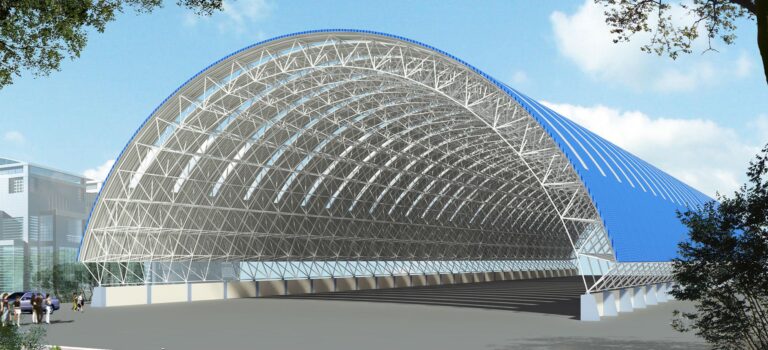
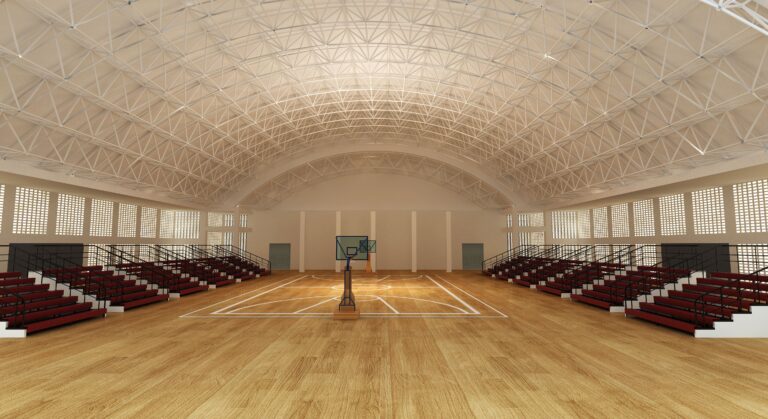
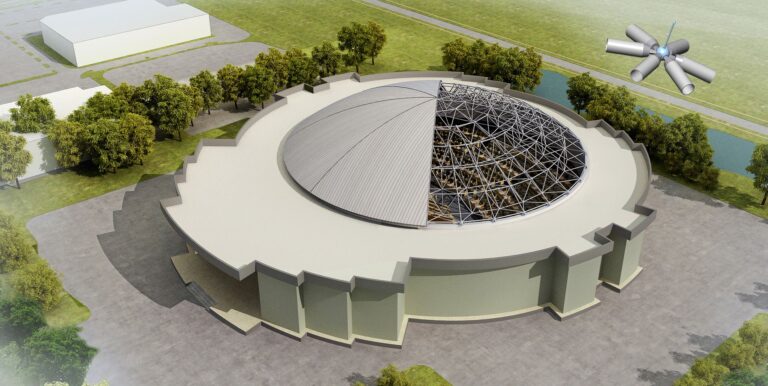
Different steel structures are suitable for different scenarios, resulting in significant price differences. Portal frame hangars offer high cost-effectiveness and are suitable for small to medium-sized hangars; space frame hangars offer better stability and more open space, making them suitable for large maintenance hangars, but are more expensive. Choosing the right structure is crucial for budget control – a wrong choice will either cost more or result in insufficient performance.
3) Project Location and Environment.
The project location directly determines the construction standards. Windy and snowy areas require reinforced structural load-bearing capacity; coastal areas with heavy salt spray necessitate upgraded anti-corrosion features; remote areas have higher logistics and transportation costs. The more demanding the environmental conditions, the higher the construction standards and the greater the investment.
4.Finally
There is no fixed unit price for hangars; the cost is influenced by multiple factors including aircraft type, structure, environment, and supporting facilities. Budget control does not mean reducing configuration; the key is to have solid preliminary planning, choose the right structural solution, and design according to actual needs. A truly cost-effective hangar project achieves a good balance between safety, functionality, and budget.
5.Common Questions
What is the most effective way to reduce hangar construction costs?
The easiest pitfall to fall into is thinking about cutting corners and lowering standards from the outset—the savings made upfront will be repaid tenfold in later repairs and maintenance.
The truly effective approach lies in the design phase: optimizing the structural scheme, eliminating unnecessary functions, and matching actual needs. Avoid blindly over-equipping or deliberately under-equipping; by rationally planning the space and structure, ineffective investment will naturally decrease.