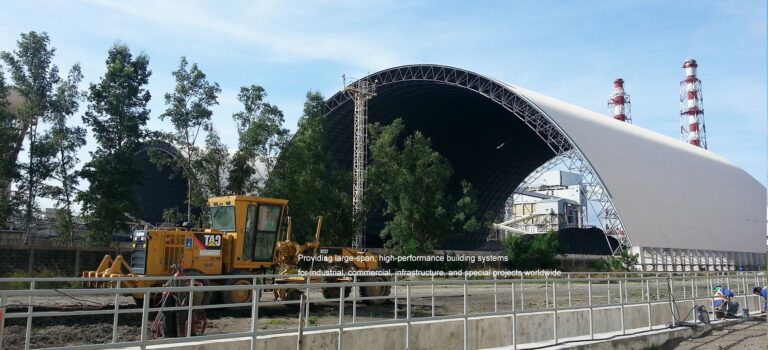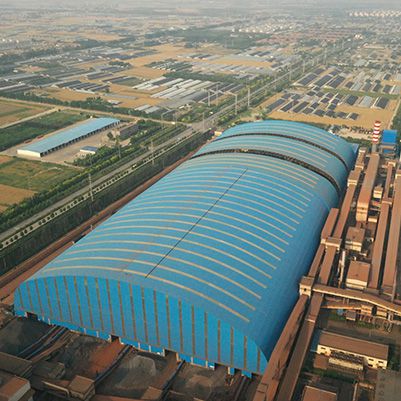
For coal mines, power plants, and industrial operators, a long-span coal storage shed is a significant investment, and the budget goes far beyond steel materials: structural design, fabrication, foundations, roofing, transportation, installation, and years of maintenance all add up.
Cutting cost, therefore, does not mean buying less steel or accepting the lowest quotation. It means making the right decisions early—on layout, structural system, material efficiency, and logistics—and then keeping the whole lifecycle in view. The measures below follow that logic, from design through construction to operation.
1. Know Where the Money Goes
Before looking for savings, it helps to see how the budget is actually distributed:
| Cost Component | Main Influencing Factors |
| Structural design | Span, structural system, design loads, engineering complexity |
| Steel materials | Steel grades, member specifications, total steel consumption |
| Fabrication | Component processing, connection details, welding, surface treatment |
| Foundation | Geological conditions, foundation type, support reactions |
| Roofing and cladding | Roofing materials, enclosure, ventilation, dust control |
| Transportation and installation | Shipping distance, component dimensions, lifting methods, schedule |
These items are interconnected. Changing the structural arrangement, for example, affects steel consumption, foundation reactions, transportation, and installation procedures at the same time. That is why the most economical solution must be judged on total project cost, not on any single line item.
2. Get the Design Right Before Construction
Design decisions lock in most of the project’s cost. Four aspects deserve particular attention.
Size the building to actual needs.
An oversized shed wastes money on steel, foundations, and roofing. Before fixing the dimensions, work out the required storage capacity, coal density and stockpile height, turnover requirements, the dimensions of stacker–reclaimer equipment, and the clear span and internal working space the operation actually needs. A layout matched to real operational requirements avoids unnecessary construction volume without squeezing material handling.
Choose the structural system deliberately.
Bolted sphere structures, steel pipe trusses, and portal frames each have their own economics:
| Evaluation Factor | Bolted Sphere Structure | Steel Pipe Truss | Portal Frame |
| Large-span applications | Suitable | Suitable for selected designs | Depends on span |
| Column-free space | Achievable | Achievable | Depends on arrangement |
| Connection method | Bolted sphere nodes | Welded or bolted | Bolted or welded |
| Fabrication | Spherical nodes and members | Pipe processing and welding | Steel section processing |
| Cost drivers | Node, member, assembly costs | Fabrication and installation | Frame size and foundations |
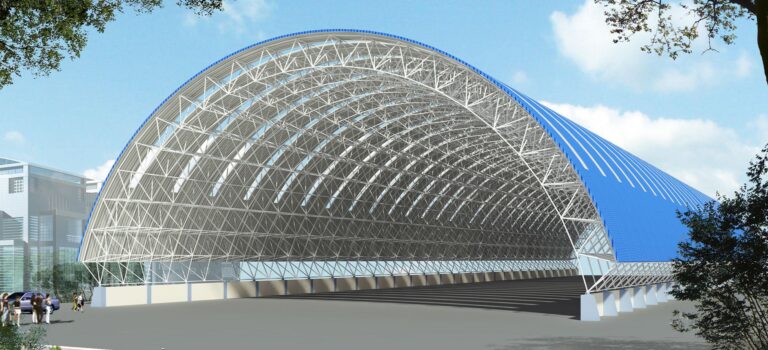
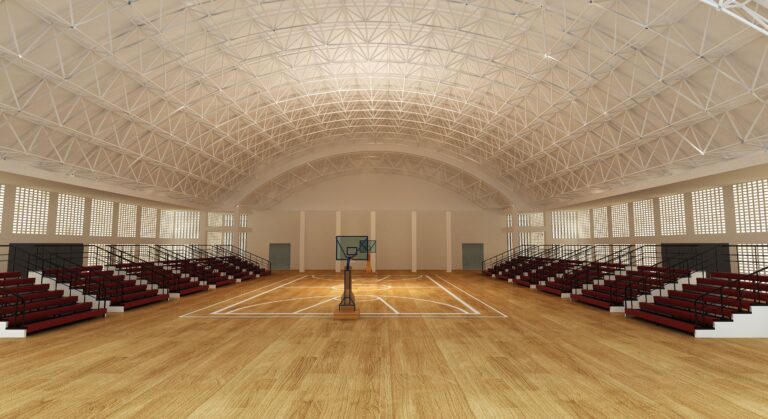
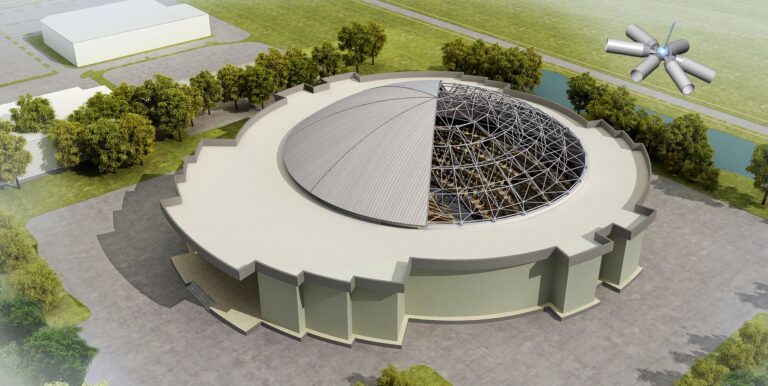
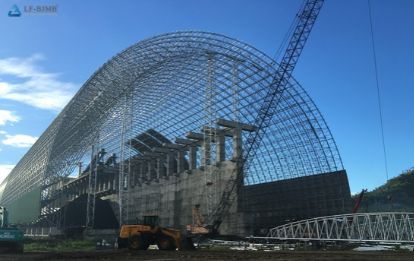
For large-span sheds requiring substantial internal clearance, a bolted sphere structure can be effective: its members and sphere nodes form a three-dimensional system that accommodates large spans and column-free storage space. But no structural system is universally the cheapest, and any comparison should be made on the same dimensions, loads, functional requirements, and construction conditions.
Cut steel weight without cutting corners.
Structural analysis helps engineers select member cross-sections to match actual loads, optimize grid arrangements and member distribution, and balance structural depth against consumption—while respecting wind, seismic, snow, and other environmental loads. The goal is not the lightest possible structure. An overly light design can create fabrication difficulties, stability problems, or installation trouble. A balanced design meets strength, stiffness, stability, and serviceability requirements at reasonable material and manufacturing cost.
Design for fabrication and assembly.
Standardized connection details, reasonable member specifications, and well-organized component layouts reduce manufacturing complexity. For bolted sphere structures in particular, node design, member dimensions, component numbering, and assembly procedures need to be coordinated, so that the site does not face unnecessary component variations or repeated processing.
3. Don’t Overlook Foundations, Roofing, and Logistics
Structural steel is only one part of the budget. Three adjacent cost blocks deserve equal attention.
Foundation design should start from the site.
Foundation costs depend on geology, support reactions, groundwater, and the chosen foundation system. A proper geotechnical investigation before design—covering actual bearing capacity, settlement requirements, support reactions, and drainage—prevents unnecessary reinforcement or oversized foundations. Optimization always has to stay within applicable engineering standards and safety requirements.
Roofing materials should be judged on service life, not price alone.
Climate, corrosion resistance, waterproofing, ventilation and daylighting, and dust-containment requirements all matter for a coal storage building. A cheaper roofing material that needs frequent maintenance or early replacement can end up costing more. The right choice balances initial cost, durability, environmental performance, and maintenance.
Transportation and installation need early planning.
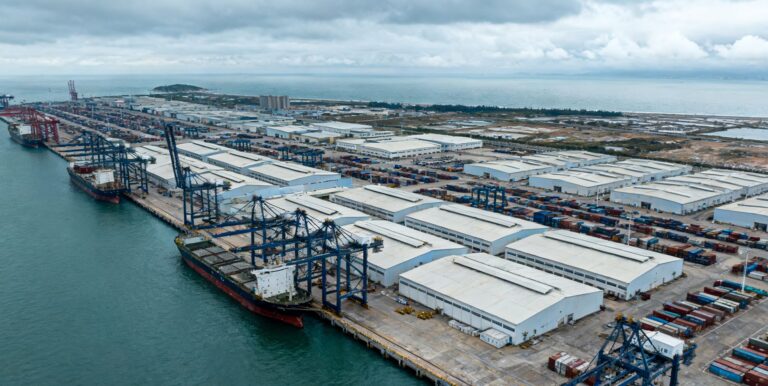
For overseas projects this can be a decisive part of the budget: large components raise shipping costs and complicate inland transport, so component dimensions and packaging should be considered at the design stage. Practical measures include optimizing component sizes for transportation, standardizing identification and numbering, preparing detailed installation drawings, planning lifting equipment and assembly sequences ahead of time, avoiding repeated handling, and aligning deliveries with the construction schedule. Bolted sphere structures have an advantage here, since members and nodes can be shipped as compact components and assembled to suit site conditions.
4. Judge by Lifecycle Cost, Not Initial Price
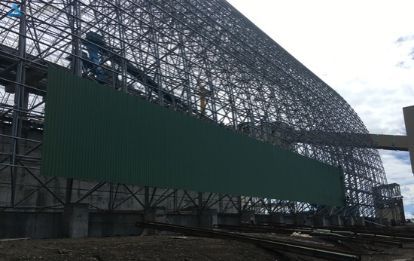
A low construction price does not necessarily mean the lowest total cost over the building’s service life. Besides the initial investment—materials, fabrication, foundations, roofing, transport, and installation—owners should weigh operating costs (ventilation, dust suppression, lighting, drainage, and material handling, whose energy consumption is worth considering at planning stage) and maintenance costs (corrosion protection, roofing inspections, drainage upkeep, component repairs).
The trade-offs are concrete. A more durable protective coating costs more upfront but reduces the frequency of future maintenance. Providing proper access for inspection and maintenance now makes future repairs easier and cheaper. The most economical shed is the one evaluated against its expected service life and operating conditions—not the one with the lowest quotation.
5. Compare Quotations on the Same Scope
The lowest quotation is not always the lowest project cost, because suppliers may include different engineering services, material specifications, fabrication requirements, and installation responsibilities. Before deciding, compare at least the following: structural design and engineering scope; steel grades and material specifications; total structural steel quantities; fabrication and surface treatment; roofing and cladding scope; foundation design responsibilities; transportation and installation costs; and quality inspection and warranty arrangements.
It is equally important to confirm whether the quotation covers detailed structural drawings, fabrication drawings, installation guidance, and other technical documents. Only when quotations are compared under the same technical specifications and delivery conditions can the real cost differences between suppliers be seen.
6. How LF-BJMB Can Help
LF-BJMB® specializes in large-span bolted sphere structure solutions and provides structural design, manufacturing, and installation support for industrial storage buildings and other large-span projects.
Cost optimization on a coal storage shed depends on coordinating design, fabrication, and construction, and this is where we focus: developing structural solutions around each project’s dimensions, storage capacity, loads, and site characteristics; integrating structural design with component and bolted sphere node manufacturing for better fabrication efficiency; and planning transportation, component identification, and assembly procedures early so installation runs smoothly. With experience in overseas large-span steel projects, we help owners evaluate structural options and make decisions across the project lifecycle.
Conclusion
Reducing the total construction cost of a large-span coal storage shed takes more than trimming steel consumption or picking the cheapest supplier. The savings come from optimizing the whole project—storage planning, structural system selection, material efficiency, foundation design, manufacturing, transportation, installation, and maintenance—starting from the early planning stage.
If you are planning a large-span coal storage shed, contact LF-BJMB to discuss your project and explore a cost-effective structural solution.