

At the project initiation stage, a primary concern for many clients is: how long will it take to complete and hand over the hangar? In reality, as highly specialized, long-span steel structures designed for aviation, aircraft hangars do not have a standardized or fixed construction duration.
The construction cycle cannot be defined by a simple, fixed number of days; instead, the duration is determined by a multitude of factors, including the design scheme, building scale, structural form, approval processes, manufacturing, logistics, and on-site construction conditions.
To effectively manage the project schedule, the key lies in clearly understanding the end-to-end construction phases and the critical factors influencing the timeline, rather than simply aiming for a predetermined duration figure.
1.Why can’t the construction timeline for an aircraft hangar be simply standardized?
Standard industrial plants and warehouses feature standardized structures and simple workflows, making their construction timelines relatively predictable.
In contrast, aircraft hangars are specialized aviation structures characterized by long spans, high clear heights, stringent safety standards, and a high degree of customization.
Different projects vary significantly in terms of the aircraft types accommodated, functional purpose, structural design, site conditions, and local regulatory requirements.
There is a vast difference in construction complexity, workflows, and supporting standards between a small, simple storage hangar and a large, multi-bay maintenance hangar. Therefore, hangar construction requires a project-specific assessment; a “one-size-fits-all” timeline template cannot be applied.

2.The five core phases of aircraft hangar construction
(1) Requirements analysis and scheme planning phase
This is the foundational phase that enables the project to proceed, directly determining the direction of all subsequent design and construction work.
The team must comprehensively analyze the project’s core requirements, clarifying the aircraft types to be serviced, primary functions (storage vs. maintenance), building scale, site conditions, investment budget, and long-term expansion plans.
Accurate definition of requirements at the outset helps avoid later design revisions and rework, serving as the primary step in ensuring a stable construction schedule.
(2) Specialized architectural and structural design phase
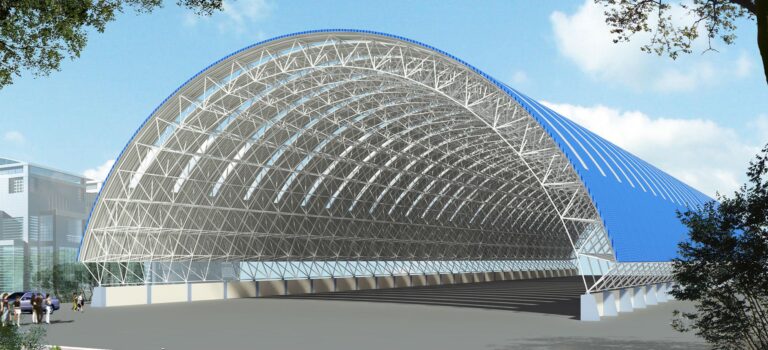
Hangar design involves multi-disciplinary collaboration, covering architectural scheme optimization, long-span structural calculations, foundation and utility design, specialized hangar door solutions, and roofing/enclosure system design, while also coordinating the layout of auxiliary systems such as fire protection, M&E (mechanical and electrical), and ventilation. The precision requirements for hangar design far exceed those of ordinary buildings. Large-span structures—such as spatial space frames and tubular trusses—demand precise structural analysis and design optimization, as the quality of the design directly determines the overall efficiency of subsequent manufacturing and construction.
(3) Steel Structure Prefabrication Phase
Once the design is finalized, the primary steel structure enters a standardized factory prefabrication process. This includes steps such as cutting and welding steel components, assembly and forming, anti-corrosion treatment, surface coating, and pre-shipment quality inspection.
Factory prefabrication offers high precision and consistent quality while significantly reducing the need for high-altitude work on-site, representing a core advantage of modern hangar construction. The duration of this phase depends primarily on the volume of steel required, structural complexity, and the factory’s production scheduling.
(4) Logistics, Transportation, and On-site Installation Phase
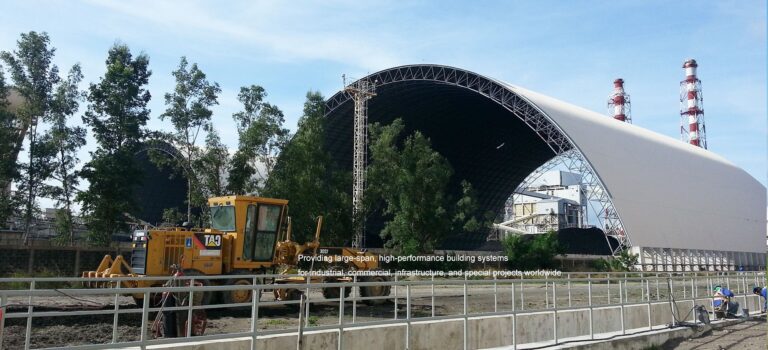
After qualified steel components are transported in batches to the construction site, the project enters the core installation phase. This involves hoisting and splicing the main steel structure, installing the roofing system and wall cladding, mounting hangar doors, and embedding components for auxiliary equipment. Factors such as on-site construction organization, hoisting plans, weather conditions, and site leveling directly impact installation progress and efficiency; this is the phase where the construction schedule is most prone to fluctuation.
(5) System Commissioning and Project Acceptance/Handover Phase
Completion of the main structure does not signify the end of the project. As specialized functional buildings, hangars require comprehensive system commissioning.
This phase includes testing the opening and closing of hangar doors, conducting linkage tests for electromechanical equipment, trial runs of fire protection and ventilation systems, verifying overall construction quality, and training operators. The hangar can only be officially put into operation for aircraft parking and maintenance once all acceptance criteria have been met.

3.Key Factors Influencing the Aircraft Hangar Construction Schedule
(1) Building Scale and Number of Aircraft Bays
As the hangar span, total floor area, and number of aircraft bays increase, the volume of steel, the extent of envelope construction, and the scope of auxiliary system engineering grow exponentially.
The design, manufacturing, and installation cycle for large, multi-bay maintenance hangars is significantly longer than that for small, single-bay parking hangars; this scale is a fundamental factor influencing the construction schedule.
(2) Aircraft Compatibility and Class
Hangars for small business jets and trainer aircraft feature simple designs and straightforward construction. In contrast, hangars for wide-body passenger aircraft and large transport planes impose rigorous requirements regarding span, vertical clearance, hangar door dimensions, structural load-bearing capacity, and maintenance support facilities; these projects involve complex structural calculations and demand higher construction precision, resulting in significantly longer overall construction timelines.
(3) Steel Structural Systems
Construction efficiency varies significantly depending on the structural system: Portal rigid frame structures offer high standardization and rapid fabrication and installation, resulting in the shortest construction periods. Tubular truss structures allow for flexible forms with moderate construction complexity. Space grid structures involve a large number of members, require high assembly precision, and entail complex structural analysis, leading to relatively longer construction periods for large-scale grid-structure hangars.
(4) Construction Site Conditions
Site flatness, foundation construction conditions, accessibility for hoisting equipment, surrounding traffic, and local climatic conditions all directly impact the construction schedule.
Rainy seasons, low temperatures in winter, and high winds can significantly delay outdoor construction progress, while site constraints and poor accessibility can hinder the efficiency of component transport and hoisting operations.
(5) Supply Chain and International Logistics Factors
Cross-border projects require additional consideration of factors such as ocean freight transit times, port handling capabilities, customs clearance procedures, and local short-haul logistics. Delays at any stage of the supply chain can lead directly to work stoppages while awaiting materials and extend the overall construction timeline; managing these factors is a critical challenge in controlling the schedules of cross-border hangar projects.
4.Core Methods to Shorten Hangar Construction Time and Improve Project Efficiency
(1) Finalizing Comprehensive Project Requirements Early
Clearly define aircraft compatibility, functional positioning, expansion requirements, and support standards during the initial project phase. This prevents frequent design changes during construction and avoids schedule delays caused by design rework or process adjustments at the source.
(2) Synchronized Collaborative Design Across Disciplines
Coordinate design efforts simultaneously across multiple disciplines—including architecture, structural engineering, hangar doors, fire protection, electromechanical systems, and building envelope systems. This proactive approach avoids interdisciplinary conflicts and eliminates the need for subsequent demolition or modification, thereby significantly enhancing the efficiency of translating designs into reality.
(3) Optimize the workflow across production, logistics, and construction
Coordinate the timing of component fabrication, bulk transport, and on-site hoisting; stagger work sequences to avoid downtime caused by material shortages or process conflicts; and maximize overall construction efficiency.
(4) Establish a full-lifecycle risk contingency plan
Develop proactive response strategies for potential risks—such as extreme weather, logistics delays, fluctuations in material supply, and on-site construction challenges—to effectively reduce the likelihood of project delays and ensure steady progress toward the deadline.
5.Scientific full-process management beats simply compressing the schedule
As aviation fixed assets with exceptionally long lifecycles, hangars are prone to long-term issues—such as quality defects, safety hazards, and system integration problems—if the construction schedule is simply compressed.
Refined project management across the entire lifecycle—optimizing design quality, standardizing construction organization, strictly controlling risks, and minimizing rework—enables efficient delivery while ensuring engineering quality and safety.
Compared to blindly rushing the schedule, scientific end-to-end management better enhances the hangar’s long-term operational value.
Conclusion
Aircraft hangar construction is a complex, systemic project integrating design, production, logistics, construction, and commissioning; the construction timeline is influenced by the interplay of multiple factors.
Project developers should not fixate on a specific duration figure but rather adopt a full-process planning mindset. Through scientific needs assessment, precise design, efficient construction, and refined management, they can achieve efficient, stable, and high-quality project delivery while safeguarding engineering quality, safety, and long-term utility.
FAQ
Q: Is there a unified industry standard for aircraft hangar construction timelines?
A: There is no unified, fixed standard. The construction period is determined by a combination of factors: project scale, aircraft class, structural type, site conditions, local regulations, and supply chain status. Assessments must be tailored to the specific project; a one-size-fits-all schedule template cannot be applied.
Q: Which stage is most likely to cause delays in a hangar project?
A: Four key stages are critical for schedule control: conceptual design changes, steel structure fabrication, cross-border logistics, and on-site hoisting/construction. Bottlenecks or delays in any of these areas will directly impact the overall project delivery schedule.