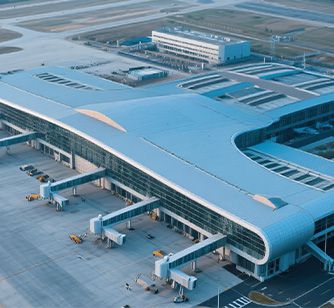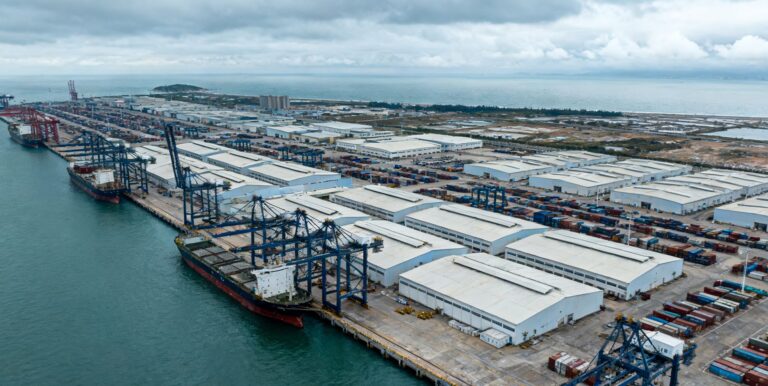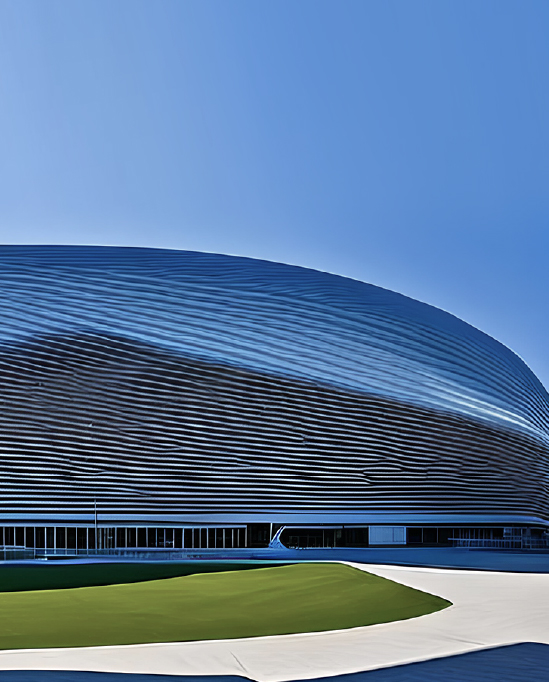


Many sports venue projects exceed their budgets, and in most cases, this is not due to wasteful construction practices, but rather a lack of understanding of cost components during the preliminary stages and the selection of inappropriate design solutions.
Compared to ordinary buildings, sports venues feature large spans, expansive open spaces, and extensive supporting facilities. While they may seem simple, there can be significant variations in construction costs.
To accurately control the budget and avoid unnecessary expenses, it is essential to first understand: where exactly do the costs lie, which factors are most likely to drive up costs, and how to save money reasonably without compromising safety or functionality.
The complexity of roofs, special structures, and specialized support systems is the primary reason why construction costs exceed those of ordinary buildings;
Most cost overruns stem from insufficient understanding during the early stages, overdesign, and unreasonable parameter selection—not from rising material prices.
1. Main Components of Sports Venue Construction Costs
The overall cost of a sports venue consists of multiple components, including structure, building envelope, specialized systems, and construction and installation, each of which directly impacts the total investment.
The roof system typically accounts for 30 to 50 percent of the total cost, making it the largest and most variable component (specific figures depend on span and design; actual figures prevail).
(1) Main Structural Costs
Foundations, concrete structures, and the main steel structure constitute the largest portion of the total cost.
Span, load, and wind and seismic resistance standards directly determine the amount of steel used and the scale of civil engineering work (design follows local codes, such as the EU Eurocode or the U.S. IBC; specific requirements depend on the local jurisdiction).
(2) Roofing System Costs
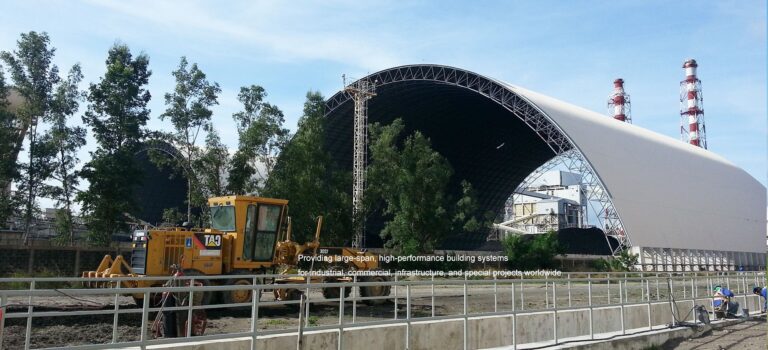
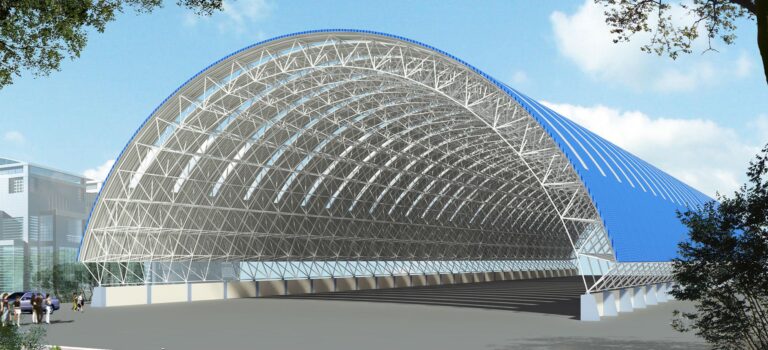
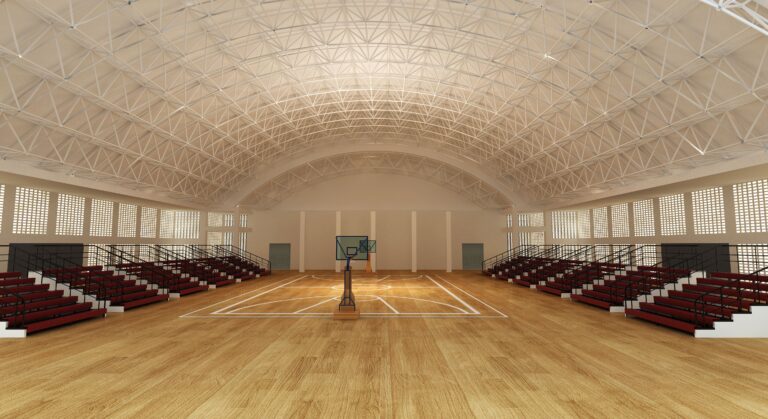
This is the component with the greatest cost variation, encompassing space frames, tubular trusses, cantilevered steel structures, roofing membranes, insulation and waterproofing, and fastening hardware. Costs for large-span, irregularly shaped roofs will increase significantly.
(3) Enclosure System Costs
Wall panels, daylighting systems, sealing and insulation, and exterior finishes determine the venue’s airtightness, durability, and long-term operation and maintenance costs.
(4) Grandstand System Costs
These include grandstand civil engineering, seating, guardrails, and evacuation platforms. The larger the spectator capacity, the higher the costs for civil engineering infrastructure, evacuation systems, and fire protection.
(5) MEP System Costs
These encompass ventilation, water supply and drainage, power and low-voltage electrical systems, and HVAC. MEP investments for enclosed indoor venues are higher than for outdoor venues.
(6) Fire Protection System Costs
Sports venues are high-occupancy public buildings subject to strict fire safety standards. They require specialized configurations such as fire compartments, sprinkler systems, smoke detectors, emergency evacuation routes, and fire pump rooms.
(7) Professional Lighting System Costs
Competition-grade field lighting, emergency lighting, and ambient lighting. Professional venues have high standards for lighting uniformity and brightness, resulting in correspondingly higher costs.
(8) Specialized Equipment Costs
Provisions for broadcast transmission, equipment suspension points, pre-installed audio and video systems, and sport-specific supporting facilities.
(9) Transportation and Installation Costs
Transportation of extra-long and extra-wide steel components, high-altitude hoisting, on-site assembly, machinery rental, and labor costs—these expenses increase significantly in remote areas.
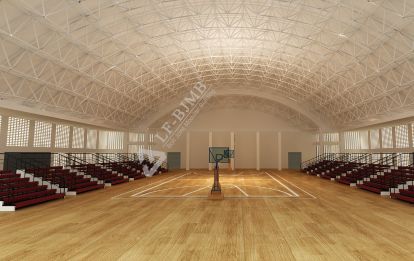
2. Key Factors Most Likely to Drive Up Sports Venue Construction Costs
Cost overruns in venue construction are rarely due to rising material prices but rather to unreasonable planning of parameters in the early stages. The following factors have the greatest impact on costs.
(1) Structural Span
Span is the primary variable affecting the cost of steel structures. As the span increases, the steel cross-sections, structural reinforcement, support systems, and foundation loads all require upgrades, leading to a significant increase in steel consumption.
(2) Roof Area and Cantilever Dimensions
The roof is the most expensive component of a venue. Blindly increasing the coverage area or extending the cantilever will directly increase costs for the steel structure, roofing materials, and waterproofing and insulation.
(3) Spectator Capacity
The number of seats determines the size of the grandstands, evacuation routes, fire safety rating, roof coverage area, and the scale of mechanical and electrical systems. The larger the capacity, the higher the overall investment.
(4) Building Height and Clear Height
The taller the building, the greater the wind loads, the more difficult the hoisting operations, and the stricter the structural stability requirements—all of which lead to increased material and construction costs (wind loads are calculated according to standards such as EN 1991-1-4 and ASCE 7; specific calculations depend on the project location).
(5) Selection of Structural Form
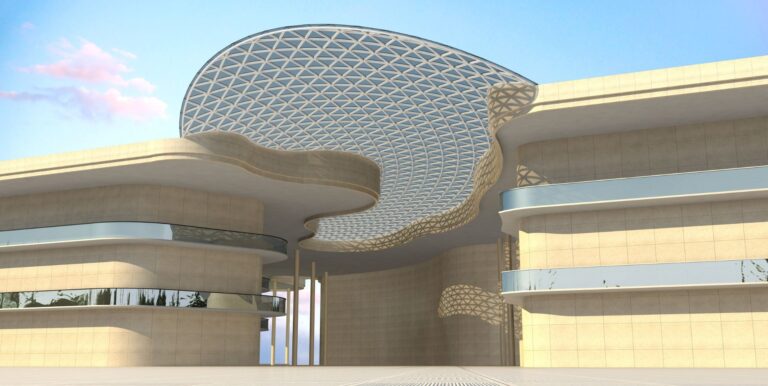
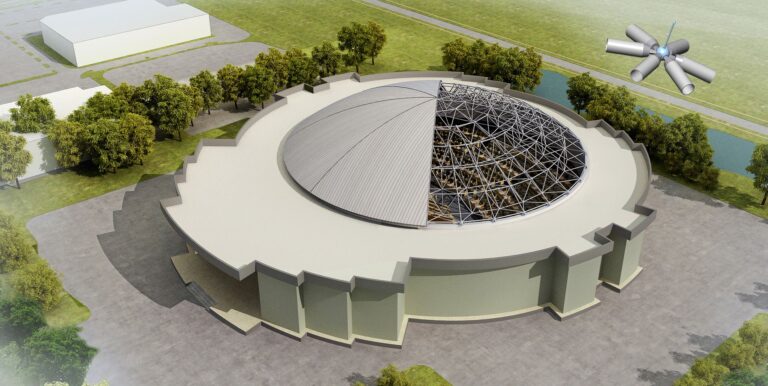
Conventional bolted-sphere space frames offer good value for money; irregular trusses, extra-large cantilevers, sculptural structures, and curved roofs are more expensive than standard structures. Blindly pursuing aesthetic design is the primary cause of budget overruns in small- and medium-sized projects.
(6) Roof Material Grades
There is a significant price difference between standard panels, wind-resistant and corrosion-resistant panels, and high-end weather-resistant panels. In coastal areas and regions with strong winds, using higher-grade materials will increase construction costs (for export projects, corrosion resistance grades are typically determined according to ISO 12944, subject to specific project site requirements).
(7) Local Labor and Equipment Costs
Labor and equipment rental costs are higher in first- and second-tier cities, tourist areas, and remote regions, which directly drive up overall construction costs.
(8) Transportation Constraints
For projects in areas with poor transportation access or remote mountainous locations, the costs associated with transporting oversized components—including transportation expenses and material losses—increase significantly.
(9) Variations in Local Codes
Local standards for wind resistance, seismic resistance, corrosion protection, and fire safety vary by region; the stricter the standards, the higher the design and construction costs.
3. Why Isn’t the Lowest Bid Necessarily the Most Cost-Effective Solution?
In sports venue construction, the lowest bid alone often results in a solution that “saves money in the short term but proves most expensive in the long run.”
Low bids typically cut costs by reducing steel thickness, lowering corrosion protection standards, simplifying support systems, compromising waterproofing details, and reducing equipment specifications.
While the initial investment may appear lower, problems such as roof leaks, structural corrosion, panel detachment, structural deformation, and high operation and maintenance costs frequently arise later on. Frequent repairs, renovations, and reinforcements result in a total life-cycle cost higher than that of a properly designed solution, and may even pose safety hazards.
A truly cost-effective venue solution requires a comprehensive assessment of five key dimensions: initial investment, construction timeline, annual maintenance costs, structural service life, and long-term operational efficiency—to ensure greater value over the entire life cycle, rather than simply competing on the lowest bid.
4. Key Principles for Scientific Cost Control in Sports Venues
Reasonable cost control does not mean compromising quality or safety; rather, it involves eliminating overdesign, precisely matching requirements, and optimizing structural solutions.
During the design phase, establishing reasonable spans, standard roof dimensions, and appropriate structural forms, while configuring mechanical, electrical, and fire protection systems based on actual needs—rather than blindly pursuing large spans, irregular shapes, or high-spec redundancy—is the most effective and prudent approach to controlling costs from the very beginning of the design process.
Conclusion
Cost variations in sports venues primarily stem from roof structures, span sizes, architectural designs, supporting standards, and local construction conditions.
The key to scientifically controlling the budget lies in precise preliminary planning, selecting configurations based on actual needs, and optimizing designs—while rejecting low-cost, substandard materials and excessive over-specification—to achieve a reasonable balance among safety, functionality, cost, and durability.
FAQ
Q: Which component accounts for the largest portion of a sports venue’s construction cost?
A: The large-span steel roof structure is the key component with the greatest variation in cost and the highest technical complexity.
Q: What is the most critical stage for controlling costs in a venue?
A: The conceptual design stage. Approximately 80% of the total cost is locked in during this phase, leaving very little room for optimization during construction.
Q: How can small and medium-sized venues achieve the best value for money?
A: Use standard bolted-sphere structures, maintain reasonable spans and roof areas, avoid irregular shapes, and tailor mechanical, electrical, fire protection, and lighting systems to actual needs.