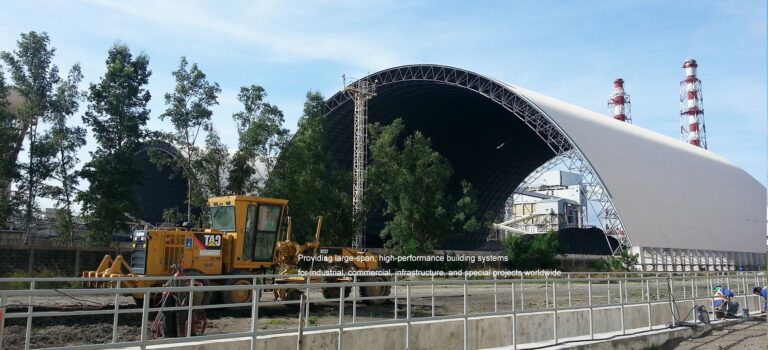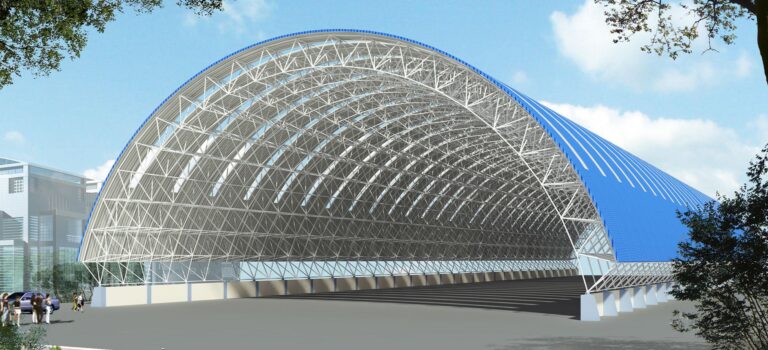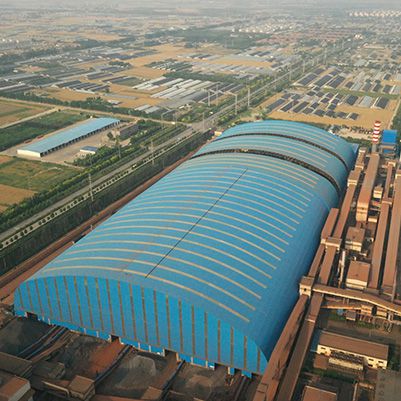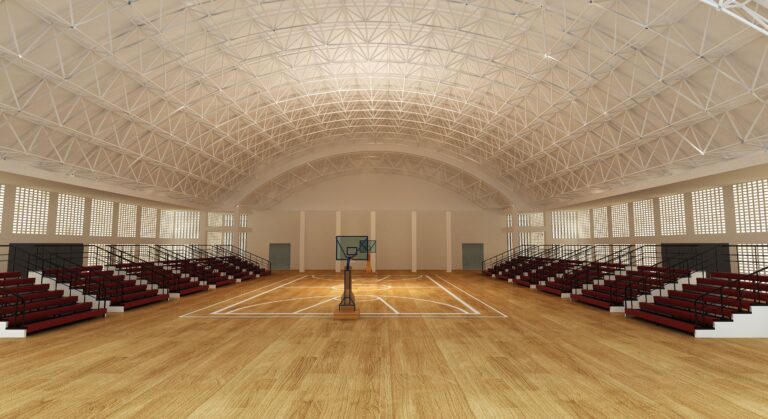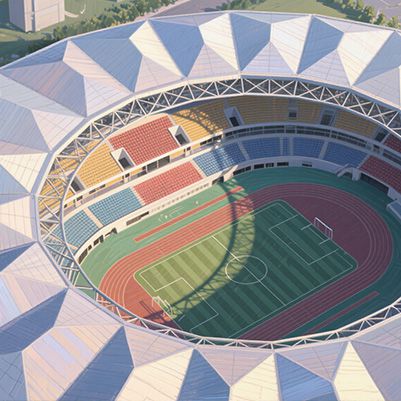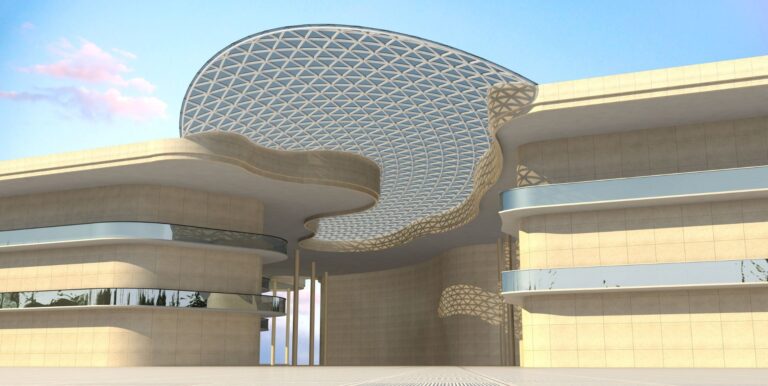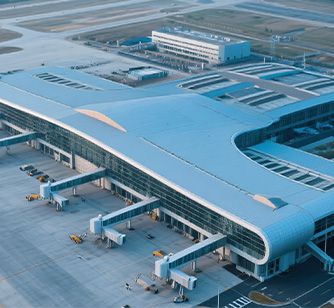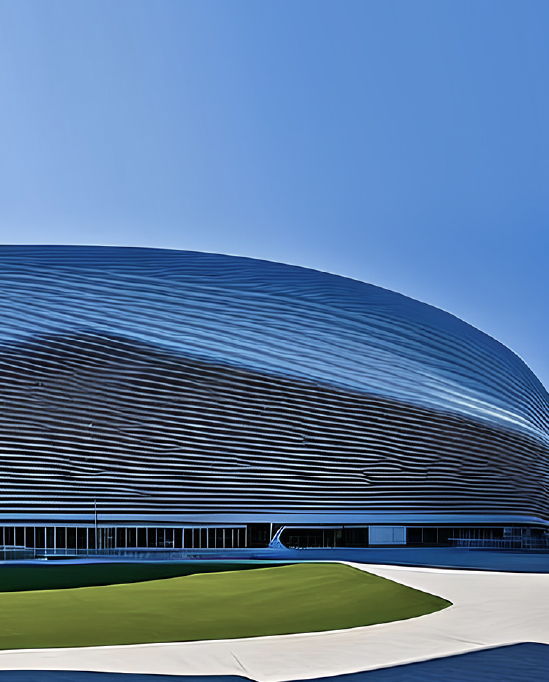
Cylindrical reticulated shells (cylindrical lattice shells) are an ideal choice for long-span hangars—particularly those with spans exceeding 60 meters—due to their superior spatial structural performance and fluid, aesthetic form.
They facilitate expansive, column-free interiors, perfectly suited to the requirements of aircraft parking and maintenance.
However, the pursuit of this efficient structural form introduces a range of complex challenges—spanning design, materials, and construction—while simultaneously offering opportunities for technical innovation and value creation.
Analysis of Core Challenges
1. Challenges in Structural Design and Analysis
Complex Spatial Structural Behavior: Under vertical loads, asymmetric loads (such as snow accumulation on one side), and wind loads, the internal force distribution within a cylindrical shell is highly complex. It involves a significant coupling of membrane forces and bending moments, necessitating an extremely high level of computational precision.
Sensitivity to Stability: Long-span thin-shell structures are highly sensitive to both global and local stability (buckling). Initial imperfections—such as installation tolerances or inherent curvature in structural members—can significantly reduce the structure’s critical load-bearing capacity.
Significant Thermal Effects: Metal structures are subject to substantial thermal stresses caused by extreme temperature fluctuations between winter and summer (which can exceed 70°C in regions like Central Asia); these must be precisely accounted for during the design phase.
Complex Seismic Analysis: While their low self-weight is advantageous for seismic performance, these structures exhibit complex dynamic characteristics. Their interaction with the supporting substructure requires sophisticated time-history analysis.
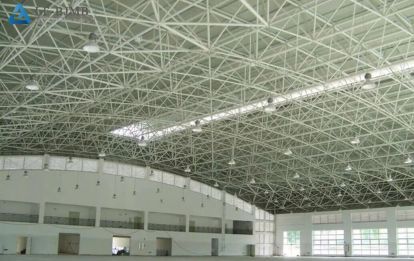
2. Challenges in Materials, Connections, and Fabrication
Complex Connection Detailing: The three-dimensional curved grid of a cylindrical shell results in a large number of non-standard connections, imposing rigorous requirements for stiffness, strength, and fabrication precision.
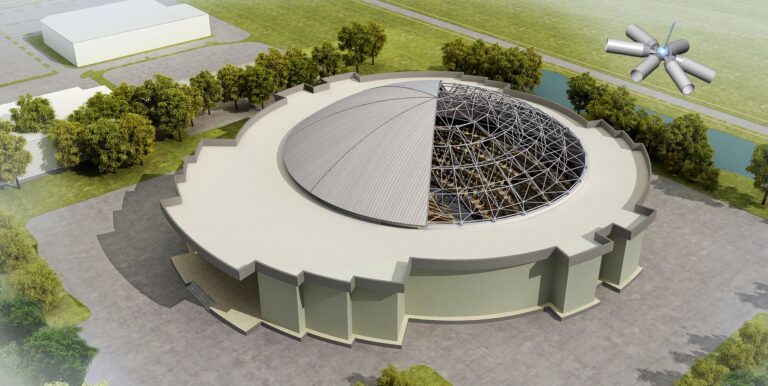
If bolted-ball joints are used, the design must accommodate a multitude of structural members meeting at diverse spatial angles.
High Material Performance Requirements: Primary load-bearing members often require high-strength steel (e.g., Q355B, Q390B) to minimize cross-sectional dimensions; this, in turn, necessitates more stringent standards for welding processes and the prevention of brittle fracture. High Complexity in Fabrication and Pre-assembly: All structural members and joints require 3D lofting and fabrication. Furthermore, precise pre-assembly—either of the entire structure or its segments—must be conducted on the ground to verify dimensions, posing significant technical management challenges.
3. Challenges in Construction, Installation, and Control
High Cost of Support Systems: For large-span cylindrical shell structures, traditional full-scaffolding support schemes may require a quantity of steel nearly equal to that of the main structure itself, resulting in poor cost-effectiveness, as well as long setup and dismantling periods.
Strict Installation Precision Requirements: Installation errors on the order of millimeters can lead to the redistribution of internal forces, potentially compromising structural safety. Achieving multi-point, multi-stage closure at significant heights presents a formidable technical challenge.
Demanding Requirements for Synchronous Lifting: If hydraulic synchronous lifting technology is employed, it becomes necessary to manage the orientation and internal force distribution of massive, ultra-heavy, and irregularly shaped structures while they are suspended in the air.
Extensive On-site Welding: The use of welded spherical joints necessitates a large volume of high-altitude welding, making it difficult to ensure weld quality and control residual stresses.
4. Challenges in Maintenance and Corrosion Protection
Complex Maintenance Surfaces: Inspecting and maintaining curved roofs—particularly the roof system and gutter cleaning—is more difficult and costly than for flat roofs.
Localized Drainage Design: Along the longitudinal axis of a cylindrical shell, drainage slopes and gutters must be meticulously designed to prevent water accumulation.
Systematic Breakthrough Strategies
1. Design Breakthroughs: Refinement and Integration
Advanced Analytical Methods: Comprehensive non-linear analysis (accounting for both geometric and material non-linearity) is essential. The “consistent imperfection mode” method should be used to simulate construction errors, ensuring an accurate assessment of the structure’s true ultimate load-bearing capacity.
Implementation of BIM-based Forward Design: A parametric BIM model should be established as early as the conceptual design phase. This enables the integration of data across structural analysis, joint design, fabrication drawing generation, and construction simulation—effectively eliminating errors, omissions, clashes, and oversights from the outset.
Performance-based Wind-resistant Design: For large-span curved structures, precise wind load distribution should be determined—potentially through wind tunnel testing or computational fluid dynamics (CFD) simulations—to optimize the structural form and mitigate the effects of wind-induced vibrations. 2. Breakthroughs in Technology and Materials
2. Promotion of High-Performance Joints:
For bolted-ball joints, utilize high-strength bolts (grade 10.9S) and thickened conical heads to withstand greater tensile forces and spatial bending moments.
For welded-ball joints, promote the use of hollow welded spheres; employ intersection-line welding or cast-steel joints for complex member convergences to enhance joint rigidity and reliability.
Application of Intelligent Construction Technologies:
3D Laser Scanning for Installation Support: Scan key control points at various construction stages and compare them in real-time against the BIM model to provide dynamic guidance for adjustments.
Utilization of “Partial Support + Segmental Incremental Sliding” or “Whole-Structure Lifting” Methods: Significantly reduce the need for high-altitude operations and extensive full-coverage scaffolding. For instance, a barrel-vault structure can be divided into longitudinal strips, assembled on a platform at one end, slid into position one by one, and then connected in mid-air.
Strict Control of Materials and Processes:
Apply hot-dip galvanizing or long-lasting anti-corrosion coatings to critical load-bearing members; ensure the design avoids enclosed cavities that are difficult to maintain.
3. Breakthroughs in Construction Organization and Management
Implementation of Full-Process Simulation: Conduct structural mechanics simulations for critical installation steps—such as lifting or sliding—to analyze internal forces and deformations under various conditions, ensuring the safety and feasibility of the construction plan.
Adoption of Digital Management: Affix RFID tags to every structural member and joint to enable end-to-end tracking—from material cutting and fabrication to transport and final installation—ensuring error-free assembly.
Strengthening Professional Collaboration: Establish a tightly integrated team comprising structural engineers, detailers, manufacturers, and installers to ensure the seamless translation of design intent into the final constructed product.