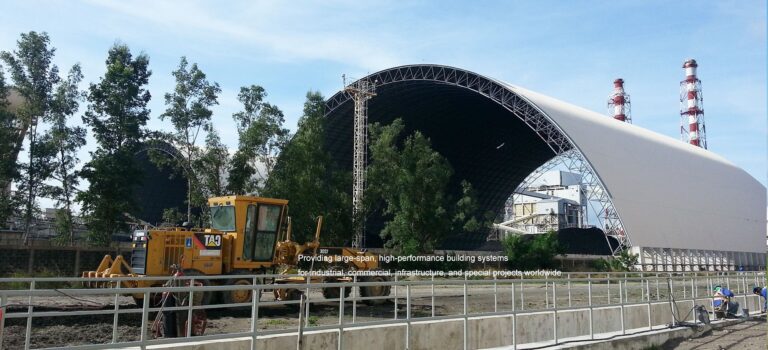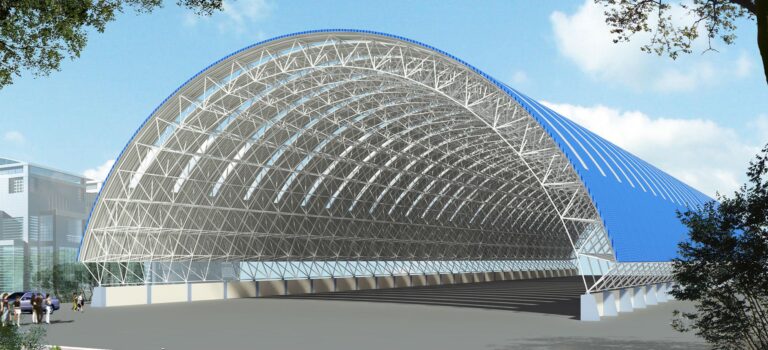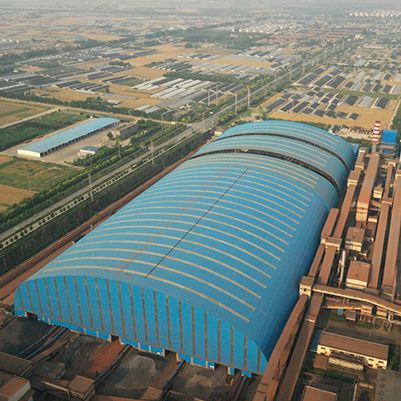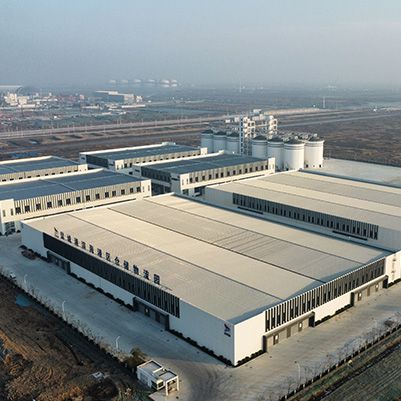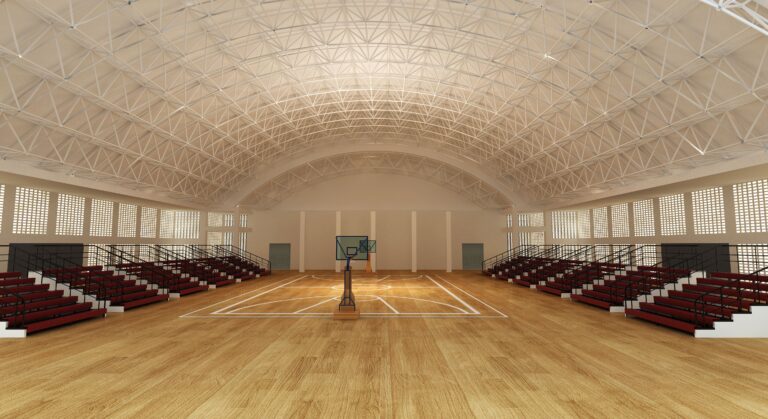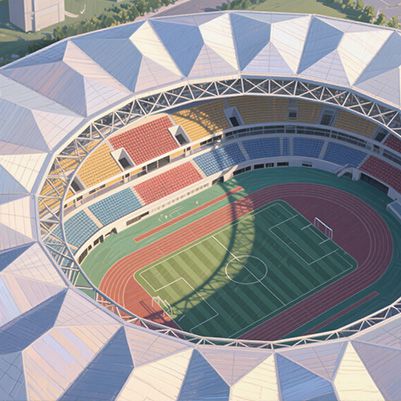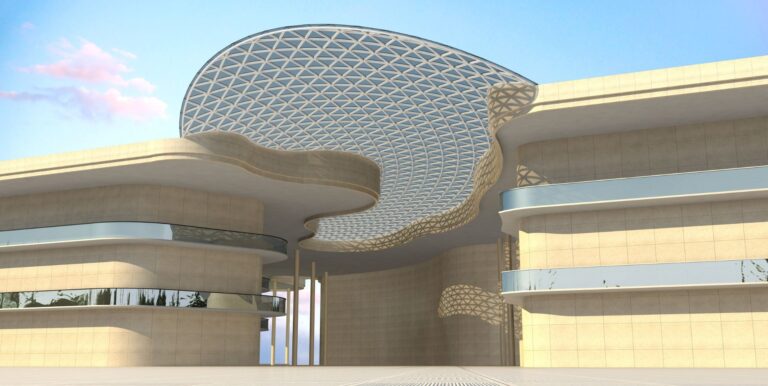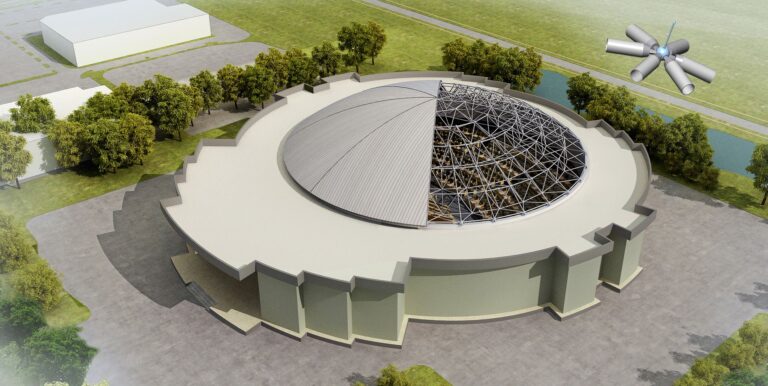


While the construction schedule for ordinary buildings is primarily determined by the progress of civil works, the timeline for sports venues depends on a combination of factors, including design, custom steel fabrication, transportation, and high-altitude installation.
Many projects experience delays or late delivery not due to a lack of construction efficiency, but rather because of insufficient early-stage coordination, disjointed workflows, and an excess of uncontrollable external factors.
1.The Complete Construction Lifecycle of Sports Venues
Sports venue construction follows an irreversible process, if a preceding stage falls behind schedule, all subsequent construction phases are pushed back, making the overall timeline highly rigid.
The complete process can be broadly divided into eight stages:

(1) Needs Analysis and Project Positioning Stage
Define the venue’s core purpose, types of sports, spectator capacity, indoor/outdoor configuration, competition standards, supporting facilities, and budget scale.
Clearer project positioning results in fewer design changes later on, serving as the foundation for a stable construction schedule.
Many instances of rework in later stages stem from vague requirements or wavering positioning during the initial phase.
(2) Architectural Schematic Design Stage
Finalize the overall layout, seating configuration, roof form, entry/exit and evacuation routes, façade design, and functional zoning.
Once the architectural scheme is finalized, subsequent structural, MEP (mechanical, electrical, and plumbing), and roofing systems are locked in; this is a critical step that determines the overall construction plan and schedule framework.
(3) Specialized Structural Design Stage
Conduct specialized calculations and detailed construction drawing development for long-span roofs, steel structures, cantilever systems, foundation loads, wind and seismic resistance, and connection details (designs must comply with local standards—such as Eurocode or IBC—depending on the project location).
The structural complexity of sports venues exceeds that of ordinary buildings; the longer periods required for drawing reviews and specialized structural verification make this a critical control point for the schedule.
(4) Steel Structure Custom Fabrication Stage
There are no off-the-shelf, standardized steel components for sports venues; all members, spherical nodes, truss tubes, and bearing accessories are custom-manufactured to meet specific project requirements. This stage encompasses multiple processes—such as material cutting, fit-up, welding, non-destructive testing (NDT), anti-corrosion coating, and pre-assembly. It involves a long production cycle and strict procedural requirements, serving as the critical path for the overall project schedule (executed according to local requirements; typically lasting 3–6 months, depending on scale and production scheduling).
(5) Component Transportation and Delivery Stage
Steel components are classified as heavy, oversized (extra-long, extra-wide, and extra-high) cargo, requiring specialized logistics, route approval, and traffic restriction management.
For domestic long-distance or cross-border overseas projects, transportation uncertainties increase significantly, often leading to issues such as delayed arrivals or incomplete batch deliveries (customs clearance for cross-border projects follows local regulations).

(6) On-site Steel Structure Installation Stage
This stage includes bearing re-surveying, assembly and positioning, overall lifting, high-altitude splicing, installation of support systems, and the formation of the primary roof structure.
Installing large-span venues places high demands on the sequence of operations, symmetrical construction, and temporary support systems; it requires high construction precision and is subject to limited effective working days.
(7) Building Envelope and MEP (Mechanical, Electrical, and Plumbing) System Construction Stage
Once the main structure is formed, multi-disciplinary, concurrent construction begins. This includes the roof and wall envelope, waterproofing and thermal insulation, civil works for spectator stands, fire protection, ventilation, lighting, power and low-voltage systems, and the embedding of event-specific equipment. The processes are complex and require a high level of coordination.
(8) System Commissioning, Acceptance, and Handover Stage
This stage involves integrated system commissioning, fire safety acceptance, final project acceptance, documentation filing, and final handover. Public venues are subject to strict acceptance standards and standardized procedures, making it difficult to arbitrarily shorten the acceptance timeline.
Typical durations range from 12–18 months for standard indoor venues to 24–36 months for large-scale event-grade venues (depending on scale and local conditions).
2.Eight Major Factors Causing Schedule Delays in Sports Venues
Based on experience with venue projects both domestically and abroad, most schedule delays stem from eight key areas—either controllable factors or issues requiring proactive mitigation—which are also the most common pitfalls for overseas projects.
(1) Frequent Design Changes (Primary Schedule Risk)
The primary causes of delays include indecision regarding preliminary schemes, mid-project adjustments to spans, modifications to roof geometry, changes to spectator stand capacity, and the addition or removal of supporting facilities. Any revision to the drawings halts factory production, renders already-manufactured components useless, and necessitates rework on-site, resulting in significant schedule delays.
(2) Difficulties in controlling the submission and approval cycle.
Sports venues are public buildings with high occupant density; consequently, standards for planning, fire safety, construction drawings, and specialized structural reviews are rigorous.
Incomplete documentation, missing specialized drawings, and delayed submissions lead to on-site work stoppages while awaiting approval—a common bottleneck for projects both domestically and internationally.
(3) Delays in the supply of key materials.
Raw materials for steel structures, specialized roofing panels, anti-corrosion materials, and M&E/fire-safety equipment are largely custom-procured and require long production lead times.
Rising raw material costs, capacity constraints, and supply chain fluctuations can directly cause work stoppages on-site due to material shortages.
(4) Long production cycles for custom steel structures.
Large-span ball-joint and truss structures involve complex processes—including flaw detection, anti-corrosion treatment, and pre-assembly inspections—making it impossible to rush production.
Tight factory production schedules and lax process control often lead to staggered component deliveries and intermittent on-site construction.
(5) High uncertainty in international cross-border transport.
For overseas projects in regions like Africa, Southeast Asia, and the Middle East, factors such as cross-border logistics, customs clearance, road conditions, and weather-related restrictions are difficult to control. Delays in arrival, port congestion, and staggered deliveries frequently disrupt on-site construction schedules.
(6) Impact of adverse weather on effective construction days.
Steel structure hoisting and roofing/facade work are high-altitude, outdoor operations; wind, rain, extreme heat, rainy seasons, typhoons, and low winter temperatures can all force work stoppages.
In tropical, coastal, and high-rainfall regions especially, the number of effective construction days is limited, making schedule extensions likely.
(7) Constraints on on-site construction conditions.
Limited site space, inability to bring in heavy machinery, inaccessible roads, inadequate temporary water and power supplies, and muddy, waterlogged ground all reduce construction efficiency and prevent the smooth, sequential progression of tasks, leading to overall schedule delays.
(8) Chaotic coordination across multiple disciplines.
Venue construction involves the simultaneous work of multiple teams covering steel structures, civil engineering, building envelopes, waterproofing, M&E systems, fire safety, lighting, and interior finishing. If preliminary process planning is unclear or coordination of concurrent tasks is inadequate, issues such as competition for workspace, conflicting workflows, and repeated rework can arise, severely delaying the overall project schedule.
3.Summary of Key Factors in Schedule Control
A stable schedule for sports venues is not achieved by blindly rushing work on-site; rather, it relies on finalizing plans early without subsequent changes, scheduling supply chain production in advance, ensuring orderly workflow transitions, and proactively anticipating risks.
Whether for domestic or overseas projects, ensuring on-time delivery largely depends on avoiding four major issues: design changes, transportation delays, weather-related work stoppages, and coordination conflicts between specialized trades.
FAQ
Q: Which stage of sports venue construction is the most time-consuming?
A: The custom fabrication of steel structures combined with on-site installation of long-span elements constitutes the critical path that dictates the overall schedule.
Q: Why is it harder to control the schedule for overseas venues compared to domestic ones?
A: Challenges regarding cross-border transport, customs clearance, local weather conditions, local regulatory approvals, and on-site coordination are greater, involving a higher number of uncertainties.
Q: What is the most effective way to avoid schedule delays?
A: Finalize the plan once during the early stages to eliminate later changes, schedule production and stock materials in advance, submit applications for approval early, and scientifically sequence concurrent tasks.