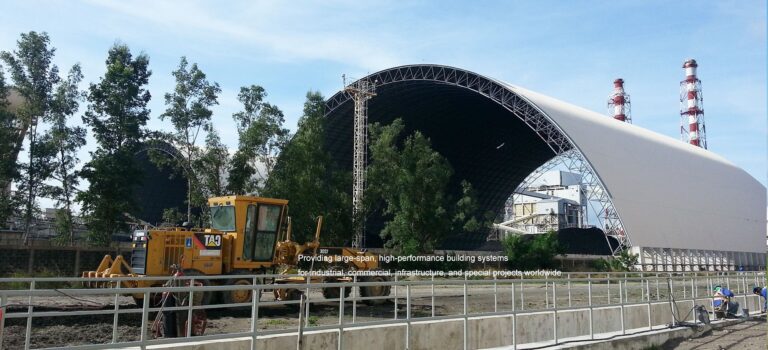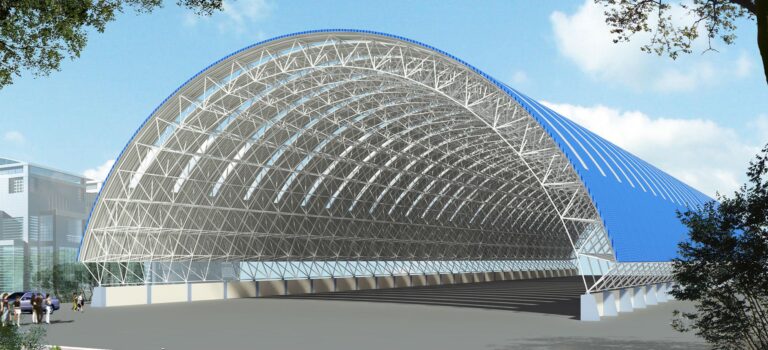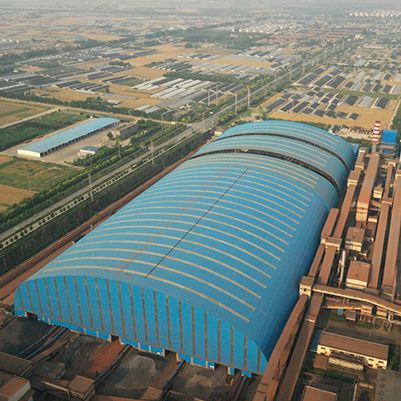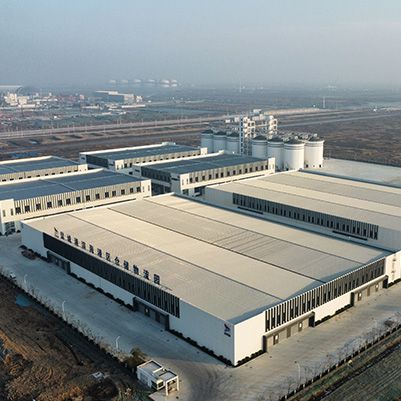


When constructing enclosed coal storage sheds, many property owners focus on the structure’s service life to assess the project’s cost-effectiveness and long-term operational stability. The service life of steel structure coal storage sheds is not a fixed value, but is mainly determined by design standards, construction technology, anti-corrosion system, usage environment and subsequent maintenance.
Under standard conditions—including compliant design, qualified construction, and proper operation and maintenance—the overall service life of a steel-structured coal storage shed generally exceeds 30 years. This article details the standards for the service life of coal storage sheds, the key influencing factors, and practical methods for extending the structure’s lifespan.
Typical Service Life of Steel Structure Coal Storage Sheds
Provided that national architectural design codes are met, standard corrosion protection processes are adopted, construction quality meets requirements, and daily operations and maintenance are properly carried out, the design service life of enclosed steel-frame coal storage sheds can reach 30 years or more.
Compared to ordinary, makeshift sheds, properly constructed steel-structured coal storage sheds feature a stable load-bearing system, high structural redundancy, and a comprehensive corrosion protection system. They are capable of withstanding the high-dust, high-humidity conditions of industrial coal storage environments over the long term and possess exceptional long-term service capability.
Even in harsh coastal or highly corrosive areas, a long and stable service life can still be ensured by specifically upgrading the corrosion protection grade and reinforcing the structural design.
Factors Affecting the Service Life of Coal Storage Sheds
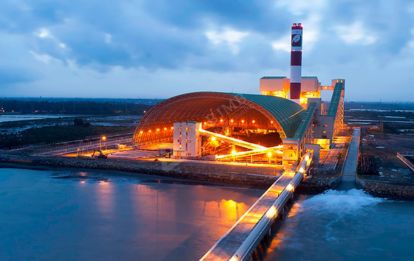
The actual service life of coal storage sheds varies from case to case and is primarily determined by five key factors.
First is the level of corrosion protection. The corrosion protection system is the core guarantee of a steel structure’s lifespan. Different processes—such as standard painting, thickened anti-corrosion coatings, hot-dip galvanizing, and composite protection combining galvanizing with a topcoat—differ significantly in their resistance to aging and corrosion, directly determining the rate of steel corrosion and the structure’s durability.
Second is the on-site operating environment. In inland industrial areas, corrosion is generally milder, resulting in a more stable structural lifespan. In contrast, coastal environments—characterized by salt fog, high humidity, heavy rainfall, high dust levels, and severe acid-base corrosion—continuously erode the steel structure and its protective coating, severely testing the structure’s protective capabilities.
Third is the quality of structural design. Whether the design has been specifically optimized based on local wind and snow loads, seismic intensity, and material stacking conditions—and whether the structural cross-sections, joint details, and drainage design are scientifically sound—directly determines the structure’s stability and fatigue resistance.
Fourth is the quality of on-site construction. Whether the machining precision of steel structural components, welding quality, installation accuracy, and anti-corrosion application processes meet standards directly affects the overall safety and durability of the structure; construction defects can become hidden hazards leading to rust and deformation later on.
Fifth is the level of post-construction operation, maintenance, and upkeep. A long-term lack of inspections, failure to promptly remove accumulated dust and standing water, and failure to repair damaged anti-corrosion coatings in a timely manner will accelerate structural aging and significantly shorten the actual service life.
How to Extend the Service Life of a Coal Storage Shed?
To ensure the long-term, stable operation of a coal storage shed and maximize its service life to approach the design lifespan, it is necessary to establish a routine, standardized operation and maintenance system.
On a daily basis, regularly inspect the condition of the overall anti-corrosion coating and promptly address peeling, cracking, flaking, and localized rust spots to prevent small areas of corrosion from spreading. At the same time, ensure proper drainage and water diversion along the roof, joints, supports, and walls throughout the structure to prevent long-term accumulation of water, salt, and dust, thereby reducing the buildup of corrosive agents at the source. Regularly inspect the integrity of steel structure connection joints, welds, and support locations to ensure the structure remains stable under load, with no loosening or deformation. Adhering to routine steel structure inspections, maintenance, and repairs can maximize the delay of structural aging and effectively extend the overall service life of the coal storage shed.
Steel structured coal storage sheds inherently offer advantages such as a long service life, structural stability, and high safety, with a standard design life of over 30 years. Actual performance primarily depends on the corrosion protection plan, environmental conditions, design and construction quality, and post-construction operation and maintenance management. By selecting an appropriate corrosion protection grade tailored to the environment, strictly controlling construction quality, and establishing a routine inspection and maintenance mechanism, it is possible to ensure the long-term safe and stable operation of the coal storage shed to the greatest extent, thereby maximizing the project’s investment value and service life.
Frequently Asked Questions (FAQ)
Q1: What is the typical service life of a steel-structure coal storage shed?
A: With proper design, standardized construction, and routine maintenance, a conventional steel-structure coal storage shed can have a service life of over 30 years.
Q2: What factors have the greatest impact on the lifespan of a coal storage shed?
A: The anti-corrosion system and the operating environment are the most critical factors; inadequate anti-corrosion measures or a harsh, corrosive environment can significantly shorten the service life of the steel structure.
Q3: Will the lifespan of a coal storage shed be shorter in coastal areas?
A: Without upgraded anti-corrosion measures, the lifespan would be significantly reduced; however, by employing high-grade anti-corrosion treatments and composite protection systems, the structure can achieve its standard service life.
Q4: Can proper maintenance really extend the shed’s lifespan significantly?
A: Yes. Regular touch-up painting, drainage system cleaning, and structural joint inspections effectively prevent the spread of rust and avoid structural damage, making this the most cost-effective way to extend the service life.