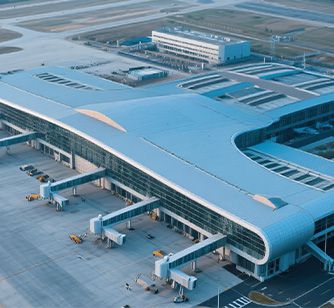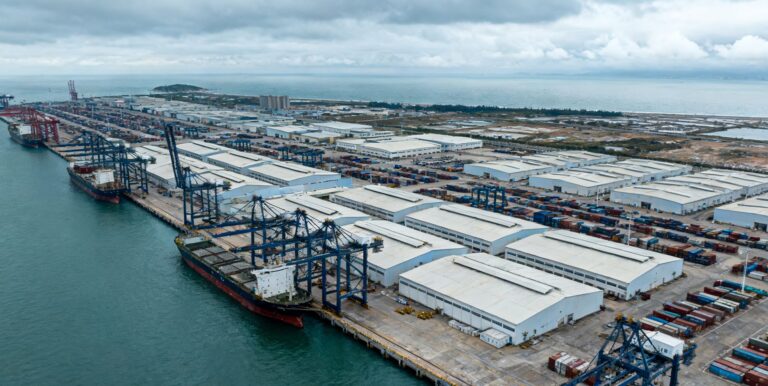


Generally, aircraft hangars are categorized into storage and maintenance hangars based on their purpose.
The two differ significantly in function, space, equipment, structure, and cost. Incorrect selection can lead to wasted investment or inadequate functionality.
Below, LFBJMB compares and analyzes the differences between parking and maintenance hangars from five aspects to help owners make the appropriate choice based on their business needs.
1.What Is an Aircraft Storage Hangar?
The primary function of a parking hangar is to provide an indoor storage environment for aircraft.
Its main purpose is to protect against dust, sunlight, rain, and salt fog, serving for long-term storage or temporary shelter. It is designed solely for parking the aircraft and securing the doors; it does not involve disassembly, assembly, or maintenance.
General aviation bases, aircraft storage yards, and projects for the storage of idle passenger aircraft mostly use this type.
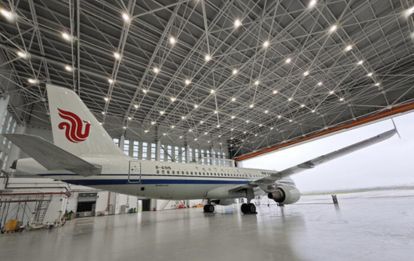
2.What Is an Aircraft Maintenance Hangar?
A maintenance hangar functions as a specialized workshop.
It supports aircraft inspection, repair, and maintenance operations.
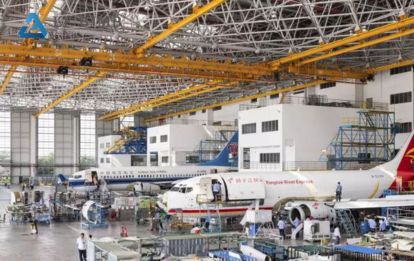
Maintenance teams perform scheduled inspections, major overhauls, parts replacement, and troubleshooting inside the hangar. It must accommodate maintenance technicians, tools, lifting equipment, and aircraft parts, serving as the main operational base for aviation maintenance enterprises.
Civil aviation MRO bases and airline-owned maintenance facilities generally follow applicable maintenance standards, and their fire safety and design must meet requirements such as GB 50284, “Fire Protection Design Code for Aircraft Hangars.”
3.Functional Differences
The function of a parking hangar is very simple: protection and storage. Aircraft simply drive in and park; long-term storage is not a problem.
A maintenance hangar is primarily for repairs. After entering the hangar, work includes airframe inspections, engine disassembly and reassembly, interior repairs, and parts replacement. Multiple trades work simultaneously, with people, tools, and parts moving back and forth.
4.Differences in Space Requirements
For a parking hangar, as long as the aircraft can enter and exit, with some clearance left between parking bays for passage, the spacing requirements are relatively loose.
A maintenance hangar is different. Operational space must be provided around the fuselage, under the wings, and at the nose and tail to accommodate ground crew, maintenance platforms, and transport vehicles.
Some parking bays also need space for aviation materials and work equipment. For the same aircraft, a maintenance hangar clearly occupies significantly more space.
5.Differences in Equipment Configuration
Parking hangars require minimal equipment: basic lighting, ventilation, and fire protection are sufficient; no specialized tools or fixtures are needed.
Maintenance hangars require a complete set of equipment: maintenance platforms, engine hoists, air and power supply connections, oil and grease collection systems, an aircraft parts warehouse, and a tool room. Overhaul hangars also include wastewater treatment, exhaust ventilation, and parts cleaning facilities. The equipment list is much longer.
6.Differences in Clear Height and Structure
A parking hangar only needs enough clear height for the aircraft to enter safely. The structure can focus mainly on parking requirements.
A maintenance hangar needs additional height for maintenance hoists and elevated work platforms. Engineers should not determine the clear height only from the aircraft tail height. For example, the tail section of a wide-body aircraft is over ten meters high; when hoists and platforms are factored in, the clear height often needs to be 25 to 30 meters or more.
The roof must withstand suspended loads, and the floor must bear the weight of heavy vehicles, so structural safety standards are higher than those for parking hangars.
The same aircraft model may therefore require different dimensions for the two hangar types. Maintenance hangars usually need greater span, headroom, and structural safety margins: parking hangars typically have spans of 60 to 90 meters, while maintenance hangars often exceed 100 meters.
7.Differences in Construction Investment
Investment in parking hangars is easier to control, as it mainly consists of the building itself plus foundations, fire protection, and ventilation, resulting in a lower cost per cubic meter.
Maintenance hangars require more than the building itself. Owners also need to invest in process equipment, piping, and specialized fire protection systems. For the same floor area, the total investment is generally much higher than that of a parking hangar (typically 1.5 to 2 times higher, depending on the specific design).
Many projects compare only floor area, overlooking process equipment, which can easily lead to underestimated budgets.
8.How to Choose Based on Purpose
If the facility is only for storing aircraft, mothballing, or protection against sand and dust—and no in-depth maintenance is planned—choose a parking hangar to save money.
If operations require scheduled inspections, major overhauls, or handling maintenance orders—you must plan for a maintenance hangar. Do not make do with a parking hangar; retrofitting later will cost more than building a new one from scratch.
Some integrated bases take a middle ground: part of the space is used for parking, while another part is built to maintenance standards, accommodating both types of operations.
9.Frequently Asked Questions
Q1: Can a parking hangar be converted into a maintenance hangar later on?
A: It can be converted, but there are many restrictions. The original building’s clear height, floor load-bearing capacity, load-bearing capacity of lifting points, and equipment interfaces must all meet maintenance standards. If even one requirement is missing, major reinforcement work will be required, which is quite costly. It is more cost-effective to determine the intended use at the project initiation stage.
Q2: Can a maintenance hangar be used solely for aircraft parking?
A: Yes. Maintenance standards are higher than parking standards, so using it for parking is perfectly fine—it just means you’ve spent more upfront, resulting in some redundancy. Avoid doing this when your budget is tight.