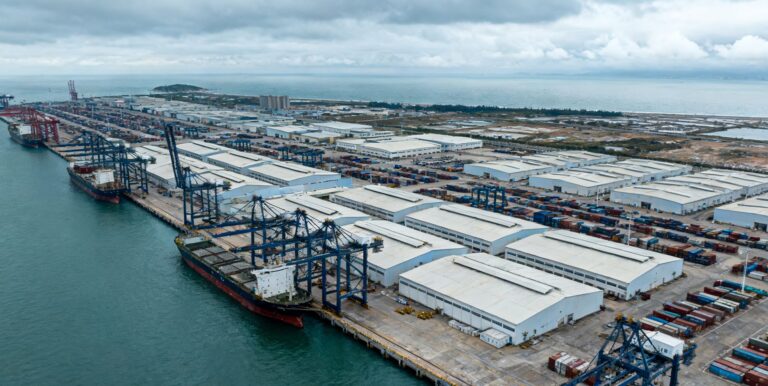


Many property owners investing in aviation infrastructure for the first time often wonder: How are aircraft hangars built?
Unlike ordinary industrial buildings, aircraft hangars are specialized steel structures characterized by large spans, high standards, and the integration of multiple systems. From initial planning to final delivery, they follow a comprehensive and rigorous standardized construction process.
Each stage is interlinked and directly determines the hangar’s structural safety, functionality, construction quality, and final outcome.
This article provides a comprehensive breakdown of the five major construction phases for aircraft hangars, clearly outlining the entire process from conceptual design to project delivery.
1. Project Requirements Analysis
The first step in hangar construction is not design, but rather a precise analysis of the project’s core requirements. This is a critical preliminary step for avoiding rework and design changes later on, and it primarily includes four key elements:
Confirmation of Aircraft Model: Clearly identify the aircraft models the project will accommodate, distinguishing between small general aviation aircraft, business jets, narrow-body/wide-body passenger aircraft, and large transport aircraft. Different aircraft models directly determine the hangar’s span, clear height, door opening dimensions, and structural load standards.
Defining Functional Purpose: Distinguish between hangars designed solely for aircraft parking and those for specialized maintenance. Parking-type hangars focus on providing basic protective space, while maintenance-type hangars must reserve space for inspections, hoisting, and equipment operations, and require higher standards for supporting fire protection, ventilation, and electromechanical systems.
Construction Scale Planning: Based on operational needs, determine the number of aircraft bays, floor area, and site layout; clarify layout options for single-bay or multi-bay contiguous configurations; and finalize the overall construction scale.
Provision for Future Expansion: In light of long-term aviation business development, anticipate aircraft model upgrades and capacity expansion needs; reserve structural interfaces and site buffer zones in advance to ensure the hangar’s long-term upgrade and expansion capabilities.
2. Architectural and Structural Design
Once requirements are confirmed, the project enters the detailed design phase across all disciplines. This is the core technical stage of hangar construction, directly determining the building’s safety and functionality. It comprises four key design areas:
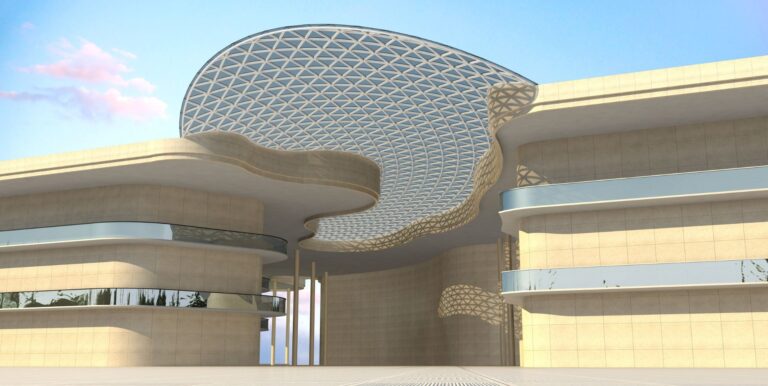
Architectural Concept Design: Taking into account site topography, local codes, and aircraft parameters, this phase plans the hangar’s overall layout, spatial dimensions, daylighting and ventilation, and functional zoning to finalize the building’s form and layout.
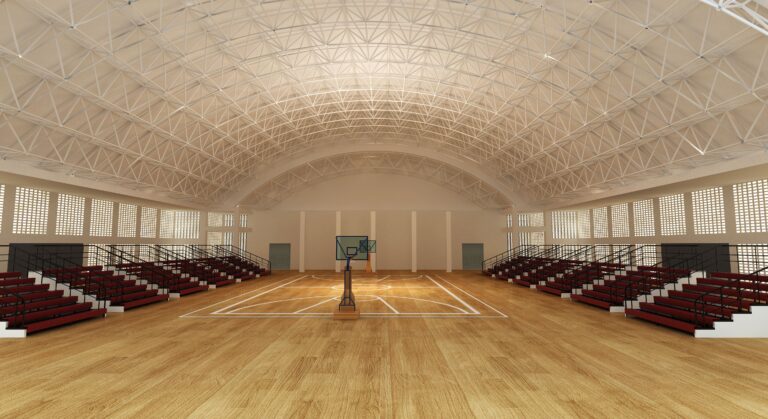
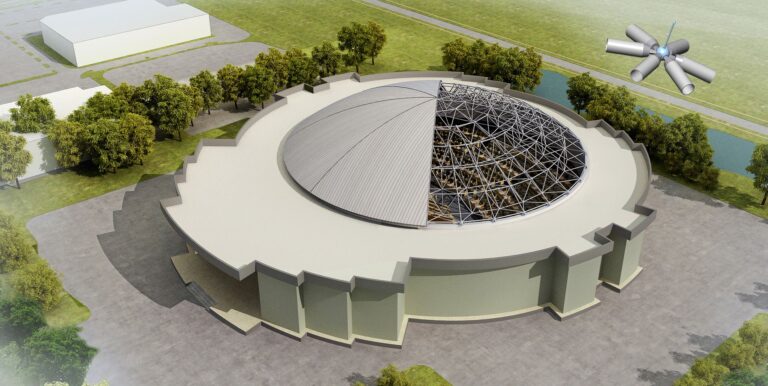
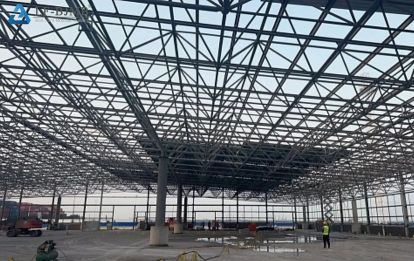
Steel Structure Calculations and Optimization: Based on span, clear height, and wind, snow, and seismic loads—and in conjunction with the selected structural forms (such as portal frames, tubular trusses, and spatial space frames)—precise stress calculations and structural optimization are conducted to ensure the overall stiffness and stability of the long-span structure.
Specialized Hangar Door Design: Determine the span and height of the door openings based on aircraft dimensions and safety margins, and select appropriate door types—such as sliding, folding, or overhead doors—while balancing access safety, wind resistance, and sealing performance.
Fire Protection and Supporting Systems Design: Addressing the hangar’s large interior space, high-value equipment, and risks associated with fuel operations, a comprehensive fire protection and mechanical/electrical solution is customized—including fire compartments, fire suppression systems, smoke exhaust and ventilation, and electrical lighting—to meet aviation building safety standards.
3. Factory Fabrication of Steel Structures
Once the design drawings are finalized, the project enters the standardized factory prefabrication phase, replacing traditional on-site cast-in-place construction to significantly improve precision and efficiency. Core processes include:
Raw Material Procurement: We select steel conforming to national standards for aviation buildings and strictly verify material parameters to ensure structural quality from the source.
Precision Machining: CNC equipment is used for steel cutting, blanking, drilling, and shaping to precisely match design dimensions, ensuring standardized and modular components.
Professional Welding: Specialized welding techniques are used to join members, joints, and components. Non-destructive testing is conducted throughout the process to eliminate welding defects and ensure structural stability under load.
Corrosion Protection and Coating: A complete process—including rust removal, application of anti-corrosion primer, and topcoat—enhances the steel structure’s resistance to corrosion and aging, making it suitable for complex outdoor climates and extending the hangar’s service life.
4. Transportation and On-Site Installation
After factory prefabrication is complete and quality inspections are passed, the components are transported to the construction site as a unified shipment, marking the start of the on-site assembly phase, which is primarily divided into four major stages:
Component Delivery to Site: Steel components, cladding panels, door systems, and other materials are delivered in batches according to the construction schedule to ensure uninterrupted on-site work and avoid work stoppages due to material delays.
Hoisting of the Main Steel Structure: Using specialized hoisting equipment, the installation proceeds sequentially—starting with foundation embedments, followed by steel columns, trusses, and the main space frame assembly—with precise control over installation accuracy to construct the hangar’s overall framework.
Roof and Enclosure Construction: Once the main structure is in place, work begins on installing roof panels, wall cladding, and waterproofing to fully enclose the building, ensuring protection against wind, rain, and providing thermal insulation.
Installation of Supporting Equipment: The embedding and installation of supporting equipment—including hangar doors, fire protection systems, ventilation, lighting, and electromechanical systems—are completed simultaneously to ensure the hangar’s full range of functional capabilities.
5. System Debugging and Project Delivery
Completion of on-site construction does not signify project completion. A full system debugging, acceptance, and delivery process is required before it can be put into formal use:
Full Equipment Interconnection Testing: Repeated interconnection testing is conducted on all systems, including hangar door opening and closing, fire protection system, ventilation and smoke extraction, electrical lighting, and hoisting equipment, to ensure stable equipment operation and functional compliance.
Overall project acceptance: Conduct a comprehensive acceptance inspection of the structural quality, safety performance, and supporting systems in accordance with the design drawings, industry standards, and local standards, identify and rectify any details, and ensure that the project complies with regulations.
Operational Training and Handover: Provide the operations team with specialized training on equipment operation, routine maintenance, and safety management; hand over the complete set of drawings, quality inspection records, and O&M manuals to finalize the project handover.
FAQ
Q: Which stage of aircraft hangar construction is the most important?
A: Every stage of the process is interconnected and indispensable, but the architectural and structural design phase is the critical core. While preliminary requirements analysis determines the project’s positioning and subsequent construction determines the quality of execution, the design phase directly dictates the hangar’s structural safety, spatial dimensions, functional configuration, and service life.
Design flaws cannot be fully remedied during construction; they can easily lead to irreversible issues such as insufficient space, structural instability, or missing functionality. Therefore, the design phase is the pivotal stage for ensuring the quality of the hangar.