

There is no fixed or standard construction period for aircraft hangars; the time required to build one depends entirely on the project specifications.
The overall timeframe is primarily influenced by a combination of factors, including the scale of the structure, the aircraft types it is designed to accommodate, the type of steel structure, the complexity of the design, the manufacturing capacity of the factory, logistics and transport conditions, and the on-site construction environment.
Small general aviation hangars are constructed quickly and have a short build time, whilst large commercial aircraft maintenance hangars and dedicated transport aircraft hangars involve complex processes and take longer to complete; overseas projects also require additional time to account for cross-border supply chain lead times.
1. Why is it not possible to simply determine the construction timeframe for an aircraft hangar?
Aircraft hangars are not standardised, run-of-the-mill buildings. Hangars with different purposes vary greatly in terms of design standards, construction difficulty and supporting systems; there is no uniform reference for construction timelines. There are significant differences in construction periods across the three main types of hangar:
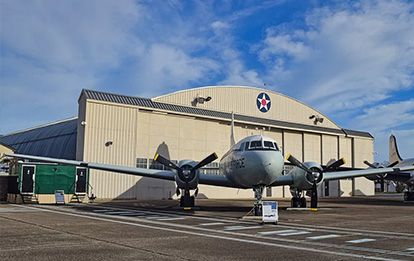
Small general aviation hangars: Designed for trainer aircraft, private aircraft and small business jets, these feature simple structures, small spans and basic supporting systems. With streamlined design and construction processes, they have the shortest overall construction period.
Civil aviation maintenance hangars: Designed for narrow-body and wide-body passenger aircraft, these require large-span, column-free spaces with high clear-height specifications, as well as comprehensive maintenance, fire protection, mechanical and electrical, and ventilation systems. The design calculations are complex and the construction processes involve numerous stages, resulting in a significantly longer construction period.
Large transport aircraft hangars: These require an extremely large span, exceptionally high clear height and high-load-bearing structural requirements. With stringent construction tolerances, a large volume of steel structures and complex supporting systems, they have the longest construction cycle and present the greatest management challenges of the three types.
2. The Five Key Factors Affecting the Construction Cycle of Aircraft Hangars
2.1 Building Scale
The scale of the building is the fundamental factor determining the construction period. The larger the floor area, the greater the hangar span and clear height, and the more aircraft parking bays available simultaneously, the more the volume of steel fabrication, cladding work and MEP installations increases exponentially.
Construction of small, single-bay hangars is efficient and rapid, whereas for large, multi-bay maintenance hangars, the entire cycle—from design and fabrication to installation—is significantly extended.
2.2 Aircraft Types Served
The aircraft types to be accommodated directly determine the design standards and construction complexity.
Small business jets and trainer aircraft have lower spatial and structural requirements, allowing for a manageable construction schedule;
Narrow-body and wide-body passenger aircraft require optimisation of span, headroom and door opening dimensions, as well as specialised maintenance facilities;
Large transport aircraft impose stringent requirements on structural load-bearing capacity, spatial specifications and safety standards, resulting in the longest design development and on-site construction periods.
2.3 Steel Structure Configurations
There are significant differences in the manufacturing and installation efficiency of various large-span steel structure systems, which directly influence the overall construction schedule:
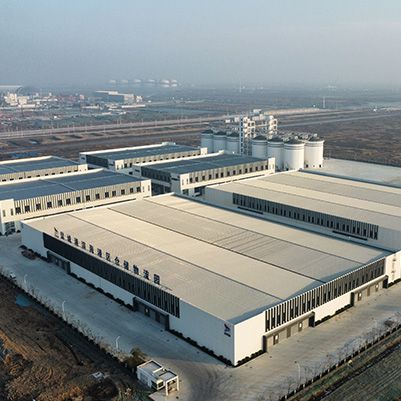
Portal frames are highly standardised, feature simple components, and allow for rapid fabrication and installation, resulting in the most optimal construction schedule;
Tubular trusses offer flexible configurations and moderate construction processes; they are suitable for medium to large hangars and have a moderate construction cycle;
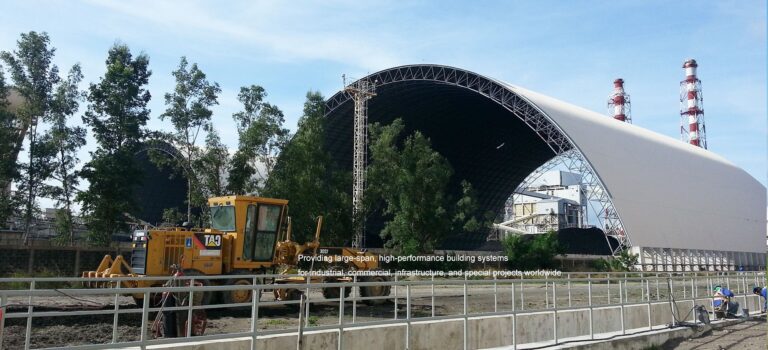
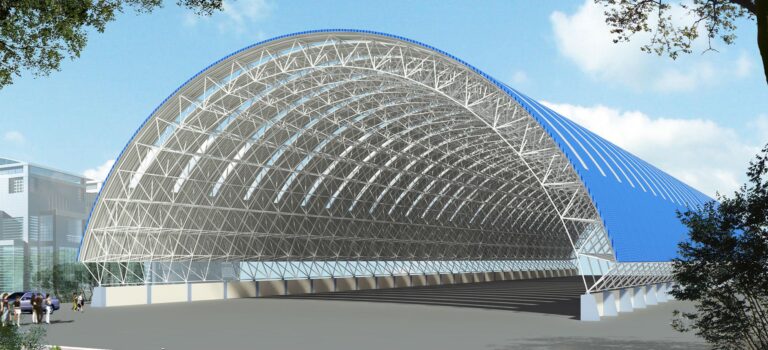
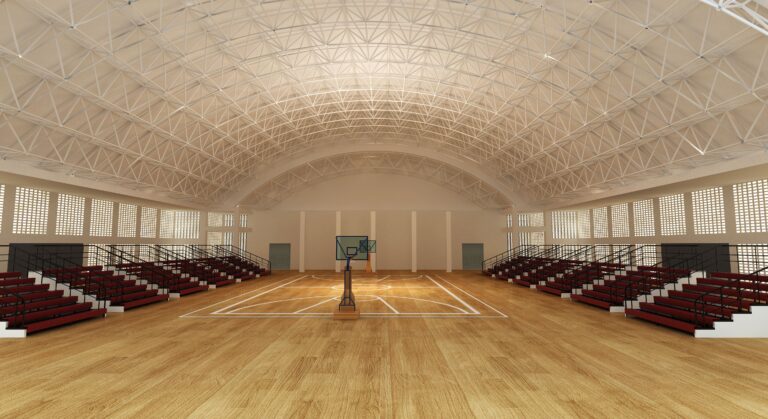
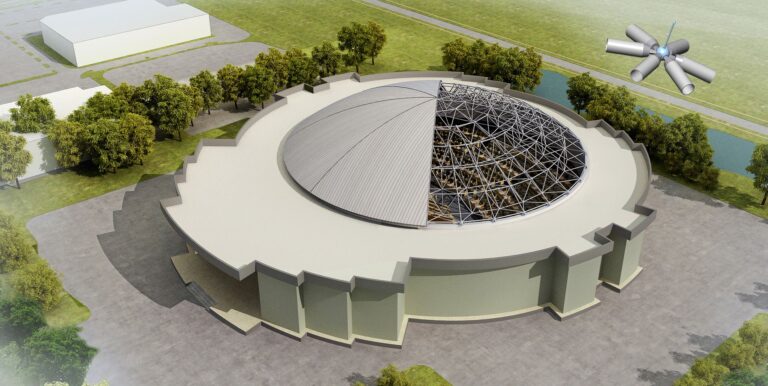
spatial space frames involve a large number of members, require high assembly precision, entail complex structural analysis, and involve intricate construction procedures; consequently, large-scale space frame hangars have the longest overall construction periods.
2.4 Conditions at the Project Site
Local environmental conditions and policies directly impact construction progress and procedures.
In terms of climate, the rainy season, strong winds and cold weather can delay outdoor hoisting and cladding works;
Site access conditions determine the efficiency of component delivery; site constraints can slow down the pace of construction;
Furthermore, variations in local building, fire safety and aviation infrastructure regulations, as well as differences in the duration of approval and acceptance procedures, further affect the overall construction cycle of aircraft hangars.
2.5 Supply Chain Factors for Overseas Projects
Cross-border overseas hangar projects involve greater variability in construction schedules and more complex management requirements.
Additional time must be allowed for sea freight, port handling, customs clearance and local short-haul logistics; congestion or delays at any of these stages will result in work stoppages on site whilst awaiting materials.
Furthermore, variations in the efficiency and construction standards of local overseas construction teams can also lead to fluctuations in the overall construction timeline.
3. Key Methods for Effectively Managing the Construction Timeline of an Aircraft Hangar
3.1 Clearly Defining Comprehensive Requirements at the Project’s Inception
During the project initiation phase, finalise the compatible aircraft types, number of parking bays, functional positioning and long-term expansion requirements. This prevents frequent design changes during the construction phase, avoids design rework and process adjustments at source, and minimises unnecessary delays.
3.2 In-Depth Coordination of Specialised Design
Conduct simultaneous detailed design across multiple disciplines—including architecture, structural engineering, hangar doors, fire safety, mechanical and electrical systems, and building envelopes—to identify potential conflicts early, optimise structural solutions and finalise construction drawings. This prevents the need for demolition, alterations and rectifications at a later stage, ensuring the process proceeds smoothly.
3.3 Comprehensive Adoption of Factory Prefabrication
By utilising standardised prefabrication processes in steel structure factories—where component welding, corrosion protection, painting and quality inspection are completed—the volume of work at height on site is significantly reduced, construction accuracy is enhanced and the on-site construction period is shortened. This is the core solution for accelerating the construction of modern hangars.
3.4 Optimisation of On-site Construction Organisation
By scientifically scheduling the transport, hoisting, cladding and equipment installation of components, and implementing flow-line and parallel construction methods, we effectively mitigate the impact of adverse weather conditions. Coordinating the allocation of on-site equipment, personnel and materials maximises construction efficiency.
Conclusion
To accurately determine how long it will take to construct an aircraft hangar, the key lies in a comprehensive assessment that takes into account project scale, suitable aircraft types, structural design, local conditions and supply chain resources.
By clarifying requirements at the preliminary stage, standardising factory prefabrication and implementing scientific construction management, it is possible to effectively stabilise and shorten the construction cycle of an aircraft hangar, ensuring its efficient and high-quality delivery.
FAQ – Frequently Asked Questions
Q: Is there a fixed standard construction period for building an aircraft hangar?
A: There is no fixed standard construction period. The duration of a hangar project is determined by multiple factors, including scale, aircraft type, structure, site conditions and the supply chain. There is a significant difference in construction time between small general aviation hangars and large transport aircraft maintenance hangars; each project must be assessed on a case-by-case basis.
Q: Which structural type allows for the fastest hangar construction?
A: Portal frame structures offer the fastest construction and the best value for money, and are suitable for small and medium-sized general aviation hangars; tubular truss and spatial space frame structures, due to their complexity and the high precision required during construction, typically have relatively longer construction periods.
Q: What are the most common causes of delays in overseas hangar projects?
A: Cross-border sea freight, customs clearance and local logistics are the stages most prone to delays, and are also the key focus areas for managing project timelines in overseas hangar projects.
Q: How can the hangar construction timeline be minimised as much as possible?
A: By finalising requirements and refining collaborative design in the early stages, and adopting a model of factory prefabrication combined with on-site assembly during the mid-phase, whilst optimising construction organisation and supply chain management, it is possible to effectively reduce the construction timeline whilst ensuring engineering quality.