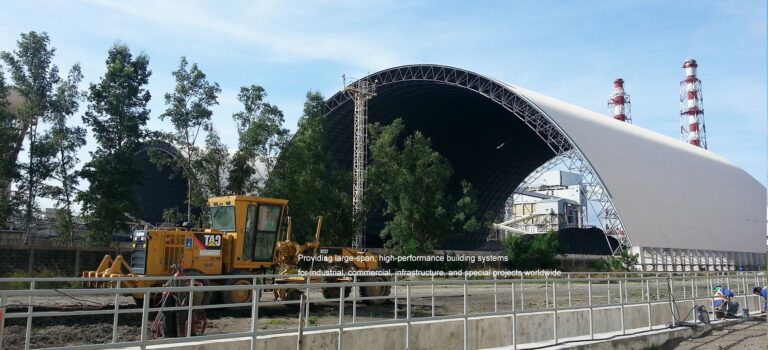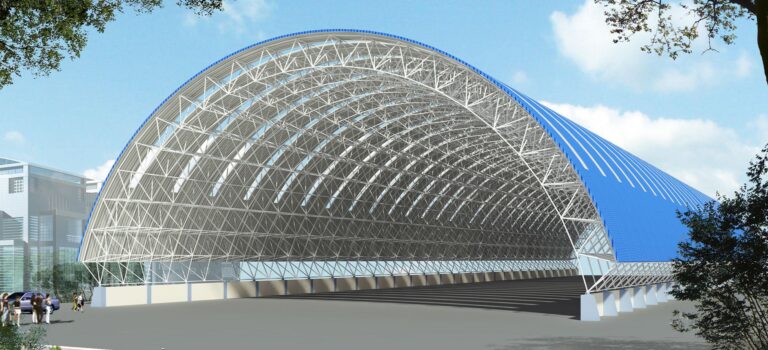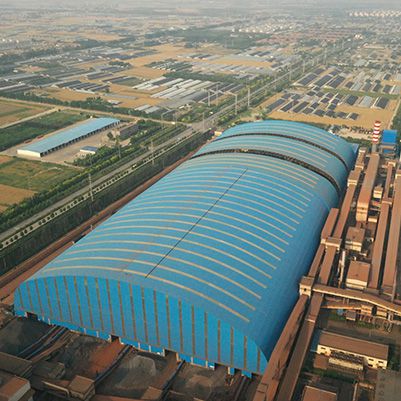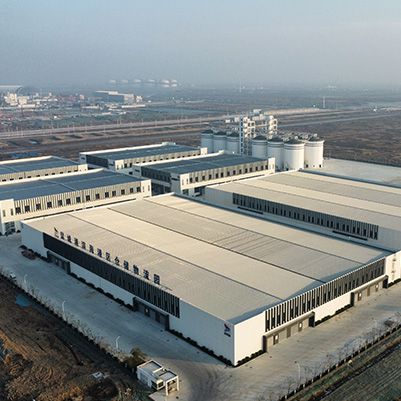
Repeated freeze-thaw cycles frequently cause leaks at the lap joints or connection points of steel-structured roofs. This article outlines technical measures designed to minimize the need for future maintenance and reduce the complexity of such tasks:
1.Design and Selection Phase
(1) Minimize complex joints: Utilize standardized, simplified joint designs to avoid “dead zones” where dust or water can accumulate. The more complex a joint is, the more difficult it becomes to apply protective coatings or perform maintenance.
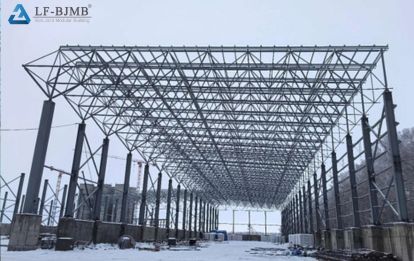
(2) Increase grid dimensions: While ensuring structural integrity, increase the grid dimensions of the space frame. This provides necessary working space for future maintenance (such as inspections or touch-up painting) and reduces the total area requiring touch-up.
(3) Design for ease of maintenance: Ensure roofs have an adequate drainage slope to prevent water pooling—avoid flat roofs or recessed areas. Design gutters to remain unobstructed, and incorporate drainage grates to ensure downpipes do not become clogged.
(4) Adopt “maintenance-free” or “low-maintenance” design concepts: Integrate permanent, safe, and reliable access walkways and vertical ladders into the initial structural design. Although this increases the initial capital cost, it effectively resolves long-term maintenance challenges and significantly lowers the risks and costs associated with high-altitude work.
2.Material Selection Phase: Prioritize highly durable and corrosion-resistant materials
(1) Focus on robust anti-corrosion coating systems: Move beyond standard anti-rust paints in favor of a multi-layer system, such as an epoxy zinc-rich primer, an epoxy micaceous iron oxide intermediate coat, and a polyurethane or fluorocarbon topcoat. This system can provide a service life of 15–20 years or longer—far exceeding the 5–8 year lifespan of conventional paints.
(2) Utilize ultra-weather-resistant topcoats: Select fluorocarbon or polysiloxane topcoats. These materials offer exceptional resistance to UV radiation, acid rain, and pollutants, while also providing self-cleaning properties. They maintain their color and gloss over long periods, thereby reducing the need for maintenance caused by chalking or fading. (3) Use of Weathering Steel (for heavily polluted areas): For structures in critical or highly corrosive environments—such as coastal regions or industrial zones—weathering steel may be considered. When exposed to the atmosphere, weathering steel develops a dense, stable oxide layer on its surface, which prevents further corrosion of the underlying metal. Long-term maintenance primarily involves sealing critical areas rather than applying large-scale protective coatings, significantly reducing the overall maintenance burden.
3.Optimization of Envelope Materials
Roofing Panels: Select highly weather-resistant materials, such as aluminum-zinc alloy-coated steel or aluminum-magnesium-manganese alloy sheets, finished with high-quality coatings (e.g., PVDF). Avoid using FRP (fiber-reinforced plastic) daylighting panels that are prone to aging and embrittlement; if they must be used, opt for high-performance versions.
Gutters: Avoid steel gutters, which are susceptible to rust. Instead, prioritize the use of stainless steel or polymer-based gutters; these materials generally require no additional anti-corrosion treatment and are resistant to the accumulation of debris.
4.Construction Control Phase
(1) Rigorous Surface Preparation: Before applying any coatings, the surface must undergo thorough abrasive blasting (sandblasting) to achieve an Sa 2.5 cleanliness standard, with surface roughness meeting specified requirements. This is fundamental to ensuring proper coating adhesion.
(2) Standardized Coating Application: Strictly control the temperature and humidity of the environment during application. Ensure that the thickness of each paint layer is uniform and meets specifications, while preventing issues such as missed spots or “sagging” (runs/drips).
(3) Protection of Finished Components: During lifting and installation, the coating must be effectively protected against scratches or damage; otherwise, these compromised areas will become focal points for future corrosion.
5.Operation and Monitoring Phase
(1) Routine Inspections: Conduct a general structural inspection at least 1–2 times per year, focusing on the condition of the coatings, the presence of any rust, the integrity of connections (checking for looseness), and ensuring that gutters remain free of blockages.
(2) Specialized Inspections: Perform a comprehensive, professional inspection every 5–10 years, including an assessment of the coating condition and a check for loose fasteners (such as screws or bolts). (3) Drone Inspection: Utilizing drones equipped with high-definition cameras or thermal imagers to conduct rapid and safe inspections of hard-to-reach areas, such as rooftops and gutters, facilitating the early detection of defects.